 Blankets & Afghans
 Crochet Baby Blanket Size Guide and Stitch Planning
The right size of baby blanket crochet project depends on how the blanket will be used, the pattern repeat, and the gauge of the yarn and hook. A newborn receiving blanket, crib blanket, and larger baby afghan can all be useful at different times, so there is no single mandatory dimension.
 Nicole Sinclair
Published · 8 min read
Nicole Sinclair
Published · 8 min read
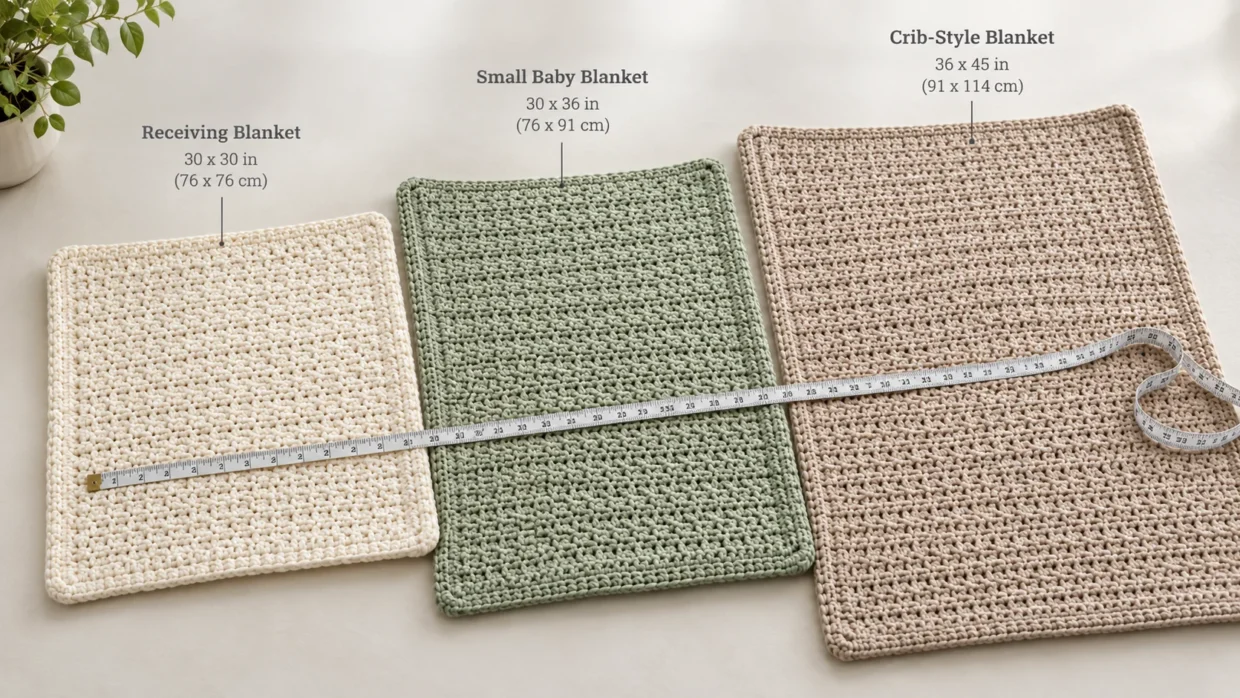
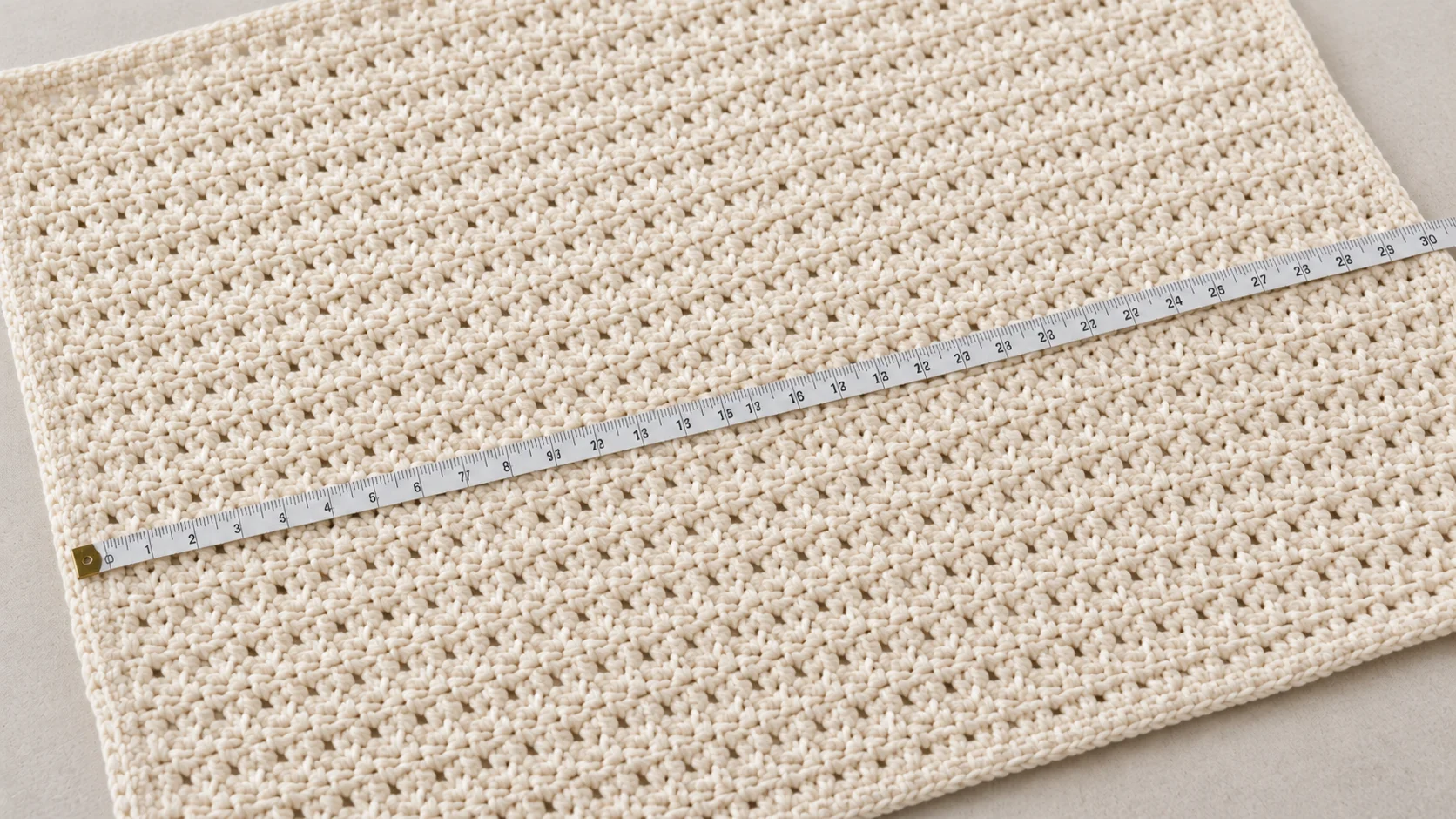
A crochet baby blanket shown with a measuring tape to illustrate finished dimensions and proportion
Pattern Information
- Skill level
- Beginner
- Yarn weight
- Can change gauge, thickness, weight, and yarn consumption
- Hook size
- Can change stitch density and fabric drape
- Construction
- Sizing and stitch-planning guide
- Stitches
- Chain, basic blanket stitches, repeat-based construction
- Gauge
- Project-dependent; use the selected pattern's stated gauge
- Pattern type
- Sizing guide
- Project type
- Baby blanket
How to Choose the Right Baby Blanket Size
Before choosing a stitch count, decide what the blanket needs to do. A small newborn or receiving blanket is useful when portability matters, while a larger crib or general-purpose baby blanket provides more coverage. A baby afghan can also be sized for longer use, but a larger blanket will require more yarn and more time to crochet. Because those needs differ, treat the dimensions below as practical starting points rather than universal rules.
| Blanket use | Practical starting dimensions | Planning note |
|---|---|---|
| Newborn / receiving blanket | About 30 × 30 in | A compact choice for gifting, carrying, or light coverage. |
| Small baby blanket | About 30 × 36 in | Useful when a little more length is desired without making a large blanket. |
| Crib-style blanket | About 36 × 45 in | Provides more surface coverage and usually requires more yarn and time. |
| Larger baby afghan | About 36 × 50 in | A versatile size when the goal is a longer-lasting blanket for general use. |
These dimensions are planning examples, not safety requirements or strict industry standards. The intended use should determine the final choice.
Baby Blanket Dimensions Crochet: Start With the Finished Size
The easiest way to plan a blanket is to work from the finished dimensions backward. Decide the target width and length first. Then identify the stitch repeat used by the pattern and determine how many repeats fit across the width at your actual gauge.
For example, suppose a pattern works in a repeat of 6 stitches plus 2 edge stitches, and your swatch produces 4 stitches per inch. If the target body width is approximately 30 inches, you need about 120 stitches across at that gauge. Because the pattern requires multiples of 6 plus 2, you would choose the nearest compatible count rather than forcing exactly 120 stitches.
Your gauge is the bridge between finished measurements and stitch counts. The same target width can require very different stitch counts in different stitch patterns.
How Gauge Changes a Crochet Baby Blanket Size
Gauge is how many stitches and rows fit into a measured area. For blanket sizing, stitch gauge generally controls width and row gauge generally controls length. A small gauge difference can become significant across a large project.
| Planning variable | What it changes |
|---|---|
| Stitches per inch | Controls approximate finished width. |
| Rows per inch | Controls approximate finished length. |
| Hook size | Can change stitch density and fabric drape. |
| Yarn weight | Can change gauge, thickness, weight, and yarn consumption. |
| Stitch pattern | Can change gauge, texture, repeat requirements, and yardage. |
For a blanket, gauge is usually about controlling the final dimensions and fabric rather than achieving clothing-style fit. If your stitch gauge is looser than the pattern’s stated gauge, the same stitch count may produce a wider blanket. A tighter gauge may produce a narrower one.
Swatch in the actual blanket stitch whenever possible. A gauge measured in a different stitch may not predict the finished blanket accurately.
How Many Chains for a Crochet Blanket?
There is no single correct number of chains for every baby blanket. The foundation chain depends on the desired width, your stitch gauge, and the repeat multiple required by the pattern.
Use this basic planning method:
- Choose the finished width you want.
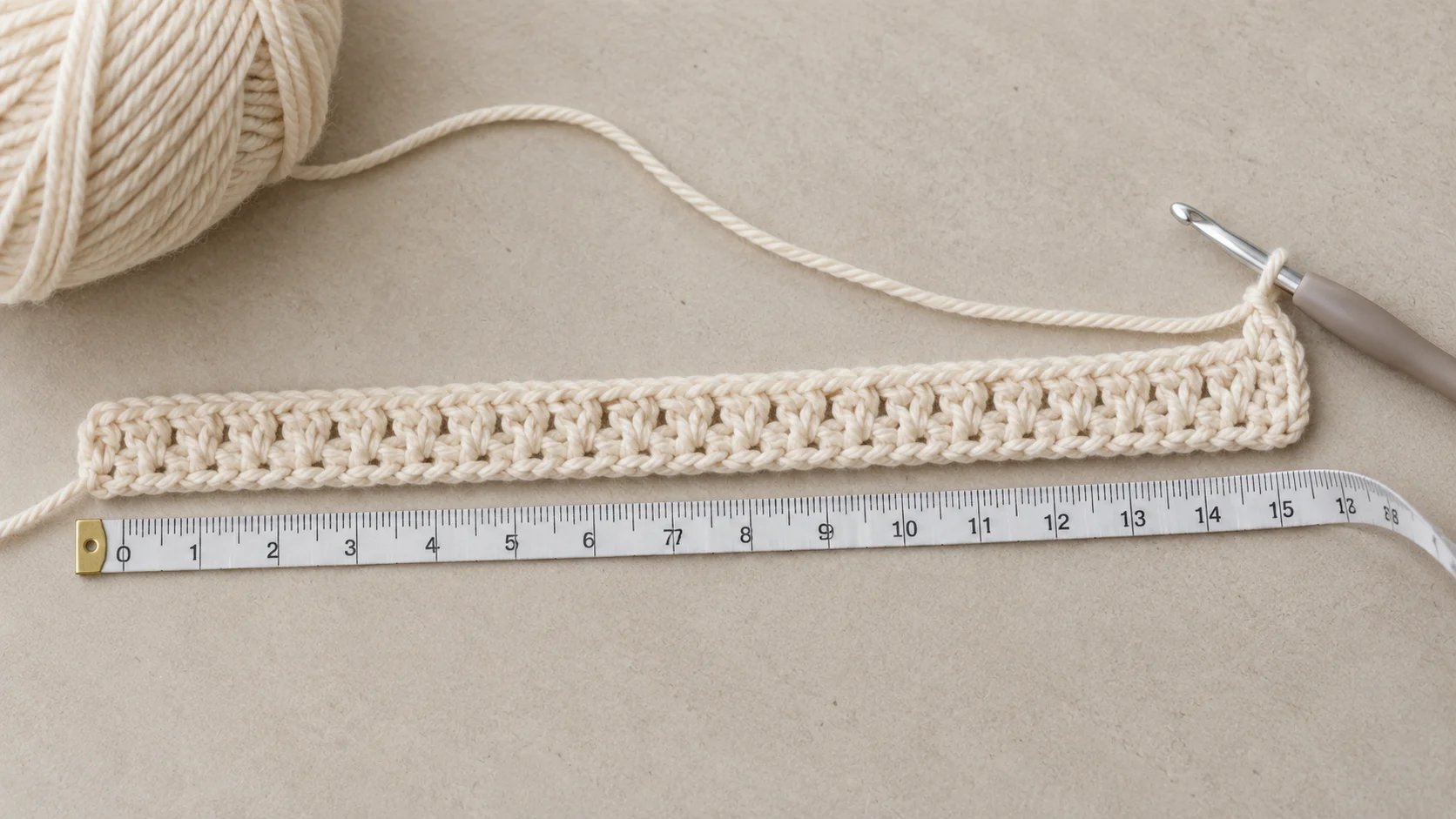
- Measure your stitch gauge in the actual blanket stitch.
- Multiply the target width in inches by stitches per inch to estimate the required body stitches.
- Adjust that estimate to the pattern’s required stitch multiple and edge stitches.
- Add any foundation-chain stitches required by the pattern’s turning-chain instructions.
For example, with a 30-inch target width and 4 stitches per inch, the initial estimate is 120 body stitches. If the pattern uses a multiple of 6 plus 2 edge stitches, you would choose a compatible count rather than forcing the exact estimate.
How Many Stitches to Crochet a Blanket?
The stitch count needed for a blanket is determined by gauge and the pattern’s required repeat. The same 30-inch target can require very different stitch counts in a dense single-crochet fabric versus a larger stitch pattern.
A useful planning formula is:
Approximate body stitches = target width in inches × stitches per inch
| Target width | Gauge | Approximate body stitch count before repeat adjustment |
|---|---|---|
| 30 in | 3 stitches/in | 90 stitches |
| 30 in | 4 stitches/in | 120 stitches |
| 30 in | 5 stitches/in | 150 stitches |
These are planning examples rather than pattern instructions. Your actual starting count should be adjusted to the stitch pattern and edge construction.
How to Plan Rows for the Finished Length
Once the width is planned, use row gauge to estimate the number of rows required for the finished length. If your swatch gives 5 rows per inch and your target length is 36 inches, the initial estimate is 180 rows.
The final count may need to change to preserve a row repeat, stripe sequence, or other design structure. Finishing on a complete repeat is usually more useful than stopping at an arbitrary row simply to hit an exact measurement.
Leave Room for the Border
One common sizing mistake is treating the blanket body as the final finished dimension. If you add a border, the border becomes part of the completed width and length.
For example, if the finished blanket should be about 30 × 36 inches and the border is expected to add about 1 inch on each side, the body can be planned closer to 28 × 34 inches before the border is worked.
How to Resize a Crochet Baby Blanket Pattern
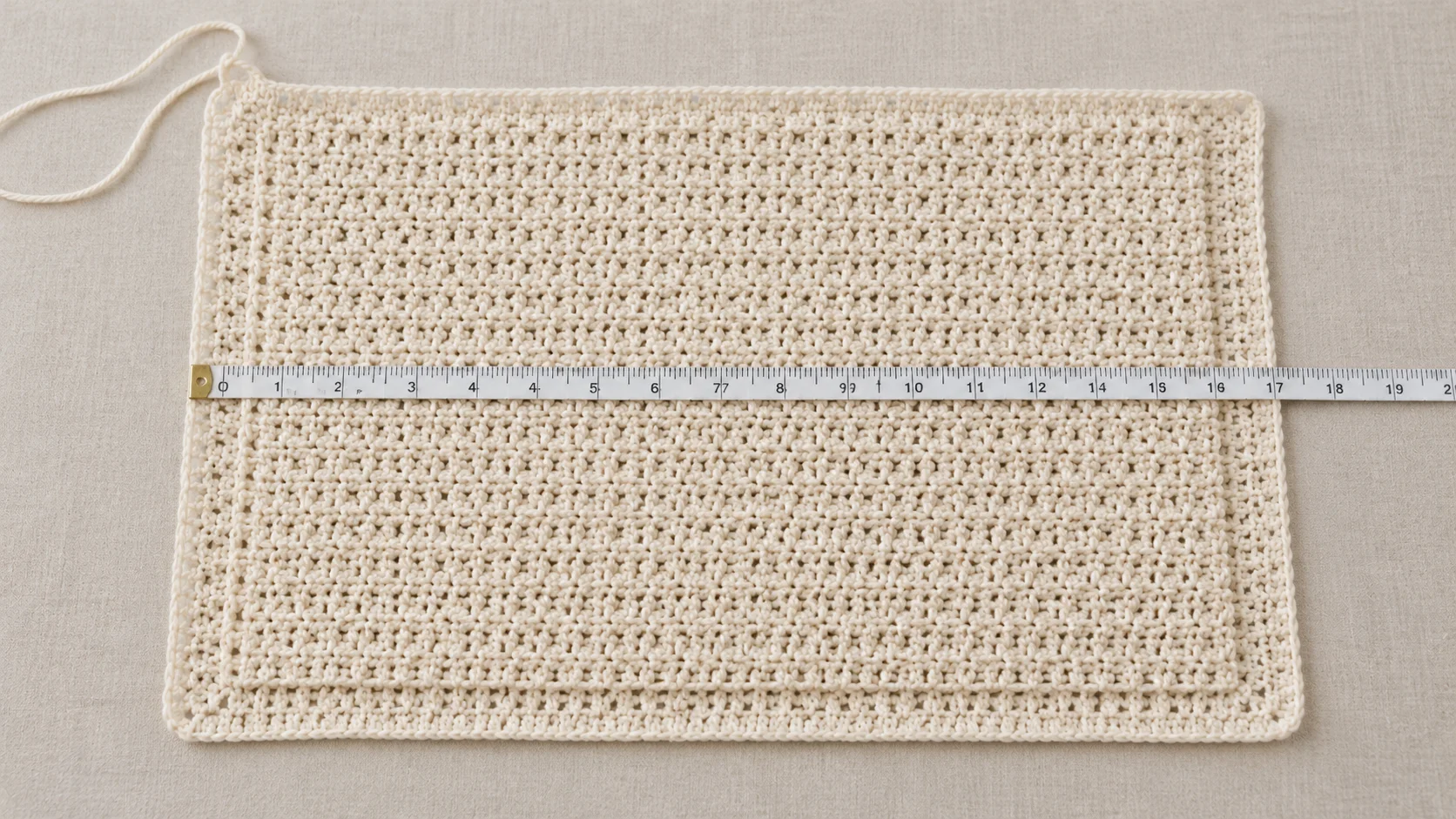
A pattern can often be resized without changing its stitch construction, but the repeat must be preserved. Start by finding the pattern’s repeat formula, such as a multiple of 4, a multiple of 6 plus 2, or another stated requirement.
- Choose the new finished width and length.
- Subtract the expected border contribution if a border is part of the finished size.
- Calculate the approximate body stitch count from your actual stitch gauge.
- Adjust the result to the nearest valid repeat multiple.
- Work enough rows to reach the desired length while preserving the pattern’s vertical repeat.
- Measure the completed body before beginning the border.
Width adjustments are often simpler than length adjustments because increasing the length can also change stripe sequences or other vertical patterning.
Choosing Yarn and Hook Size for Predictable Dimensions
Yarn and hook choices affect blanket sizing because they influence gauge and fabric density. A thicker yarn with a larger hook generally produces larger stitches, while a thinner yarn or smaller hook can produce a denser fabric.
- Use the yarn weight recommended by the pattern when possible.
- Swatch with the hook you actually plan to use.
- Expect finished dimensions and yarn consumption to change when changing yarn weight.
- Consider fabric drape and density as well as numerical gauge.
For yarn quantity planning, finished dimensions are one of the main inputs. You can also use a dedicated crochet blanket yarn guide to estimate yardage after settling on a size.
Common Crochet Baby Blanket Sizing Problems
The blanket is too narrow
Check your stitch gauge first. More stitches per inch usually mean a tighter gauge and a narrower blanket at the same stitch count. Depending on the pattern, adjust the hook size or increase the number of complete repeats.
The blanket is too wide
A looser gauge produces more width from the same stitch count. Compare your swatch with the stated gauge before changing the whole pattern.
The repeat does not fit the target width
Do not add or remove random stitches inside the repeat. Recalculate the nearest valid multiple and keep any required edge stitches separate from that multiple.
The border makes the blanket too large
Measure the blanket body before beginning a substantial border. If the finished measurement matters, account for the border during initial planning.
The gauge changes during the project
Large blankets can reveal changes in tension caused by fatigue, posture, or yarn handling. Check the blanket’s width periodically so a gradual size change can be corrected early.
A Simple Size-Planning Workflow
- Choose the intended use and target finished dimensions.
- Decide whether those dimensions include the border.
- Select the yarn and stitch pattern.
- Make a swatch using the actual stitch pattern.
- Measure stitch and row gauge.
- Calculate the approximate stitch count for the target width.
- Adjust the count to the required repeat multiple.
- Work the body to the target length while preserving any vertical repeat.
- Measure the body before starting the border.
- Finish the border and check the final dimensions.
Quick Reference: Baby Blanket Size Planning
| Goal | Determine first | Calculate next |
|---|---|---|
| Choose a blanket size | Intended use | Finished width and length |
| Choose starting stitches | Stitch gauge | Approximate stitches, then repeat adjustment |
| Choose row count | Row gauge | Approximate rows, then repeat adjustment |
| Resize a pattern | Pattern repeat | Valid stitch and row counts |
| Keep final dimensions on target | Border width | Body dimensions before the border |
Frequently Asked Questions
What is a common crochet baby blanket size?
A compact baby blanket is often planned around 30 × 30 inches, while a small baby blanket may be around 30 × 36 inches. Larger crib-style blankets can be around 36 × 45 inches or more. The best size depends on intended use, construction, and whether the dimensions include the border.
How many chains are needed for a baby blanket?
The starting chain depends on target width, stitch gauge, and the pattern’s repeat multiple. Calculate the approximate body stitch count from width × stitches per inch, then adjust it to the required multiple and edge stitches.
How do I know how big a crochet baby blanket will be?
Use the pattern’s stitch and row gauges with the planned stitch and row counts. For the most reliable result, swatch in the actual blanket stitch.
How do I resize a crochet baby blanket pattern?
Choose the new finished dimensions, account for the border, calculate stitch count from your gauge, and adjust to the pattern’s repeat multiple. Apply the same principle to rows while preserving any vertical repeat.
What is a baby afghan size?
“Baby afghan” does not represent one fixed dimension. A compact 30 × 30-inch blanket and a larger approximately 36 × 50-inch baby afghan can both be practical depending on the intended use.
Final Sizing Checklist
- Choose the intended use before choosing a stitch count.
- Define the target finished width and length.
- Swatch with the actual yarn, hook, and stitch pattern.
- Calculate stitches from gauge, then adjust to the required repeat.
- Calculate rows from gauge while preserving the vertical repeat.
- Allow for the border when the target dimension refers to the finished blanket.
- Measure the blanket body before starting a substantial border.
- Use the finished dimensions together with yarn weight and stitch density when estimating yarn.

Last updated . Found something out of date? Let us know.