 Accessories
 Baby & Kids
 Blankets & Afghans
 Clothing
How Much Yarn for a Crochet Blanket
How much yarn you need for a crochet blanket comes down to three things: the finished size you're making, the weight of yarn you're using, and how dense your particular stitch pattern turns out at your gauge.
 Nicole Sinclair
Published · Updated · 9 min read
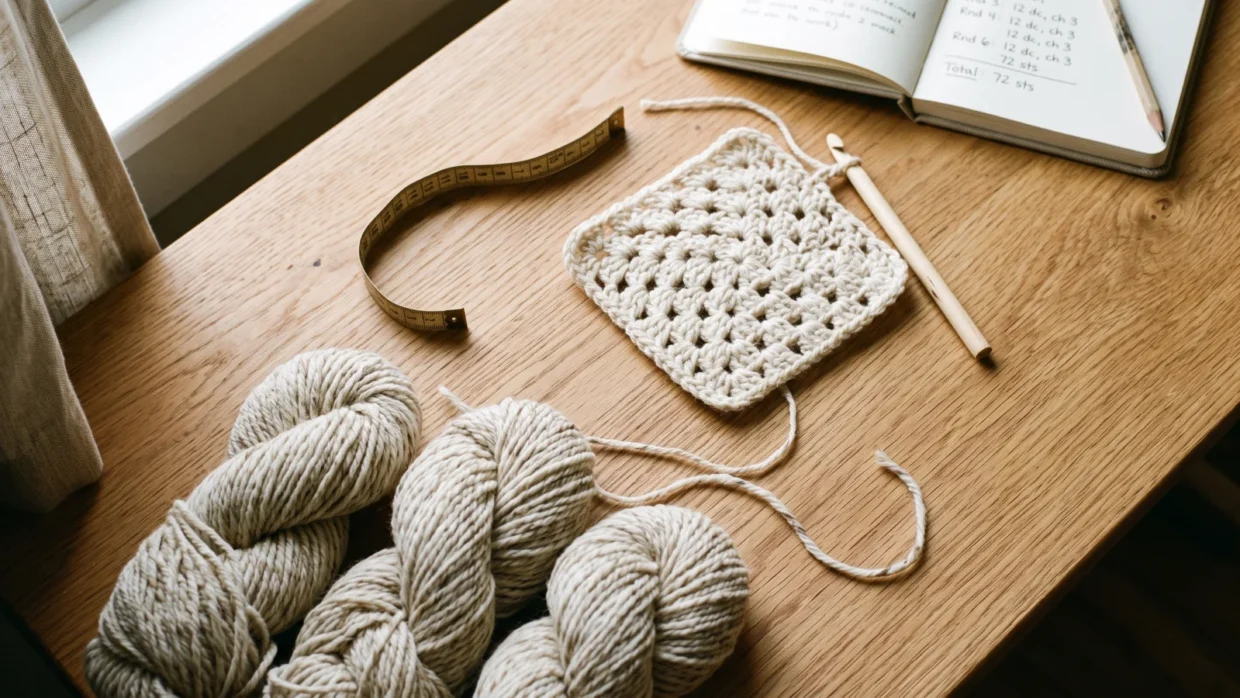
Skeins of cream worsted-weight yarn beside a partly finished crochet blanket swatch and a curled tape measure, set up to illustrate estimating yardage before a project begins
If you’ve searched how much yarn for a crochet blanket and landed on a page that just tells you “6 skeins,” you’ve probably noticed that number stops holding up the moment you change the yarn weight, the blanket size, or the stitch pattern. All three of those change how much yardage you actually use, sometimes by a lot. Instead of chasing one fixed answer, it’s more useful to learn how to calculate your own — a method that works whether you’re making a baby blanket in fingering-weight yarn or a king-size throw in chunky.
Why Blanket Yardage Isn’t One Fixed Number
Four things determine how much yarn a given blanket takes: the finished size, the yarn weight, the gauge and density of the stitch pattern, and — when one exists — the yardage stated in the actual pattern you’re following. Change any one of those and the total shifts. A lacy shell-stitch throw and a dense single crochet blanket in the same yarn, worked to the same finished size, will not use the same amount of yarn, and neither will the same stitch pattern worked in bulky yarn versus sport weight.
That’s why a single universal number for “how much yarn to crochet a blanket” isn’t something I can give you honestly. What I can give you is a way to figure out your own number in a few minutes with a swatch and a calculator.
Buy by Yards, Not by Skein Count
Skein yardage isn’t standardized across brands, and it often isn’t even consistent within the same brand once you compare different fiber blends or colorways. Two skeins labeled “worsted weight” can hold noticeably different amounts of yarn. If a pattern or a friend tells you a blanket took “five skeins,” that number is only useful once you know exactly which skein they used and how many yards were in it.
I’d always convert to total yards first, then divide by the yardage printed on the specific skein you’re planning to buy. That’s the only way the number actually transfers to your project.
How Much Yarn a Crochet Blanket Actually Needs: A Simple Estimation Method
This is the part that actually answers how many yards of yarn to crochet a blanket, because it’s based on your yarn, your hook, and your stitch pattern instead of someone else’s.
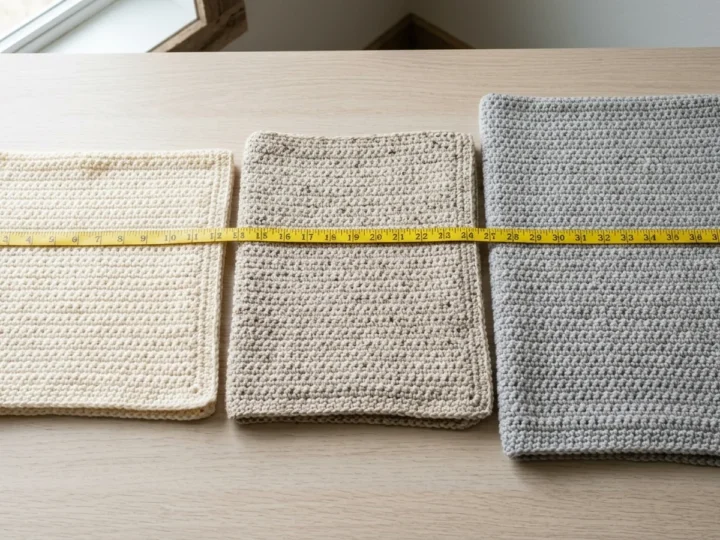
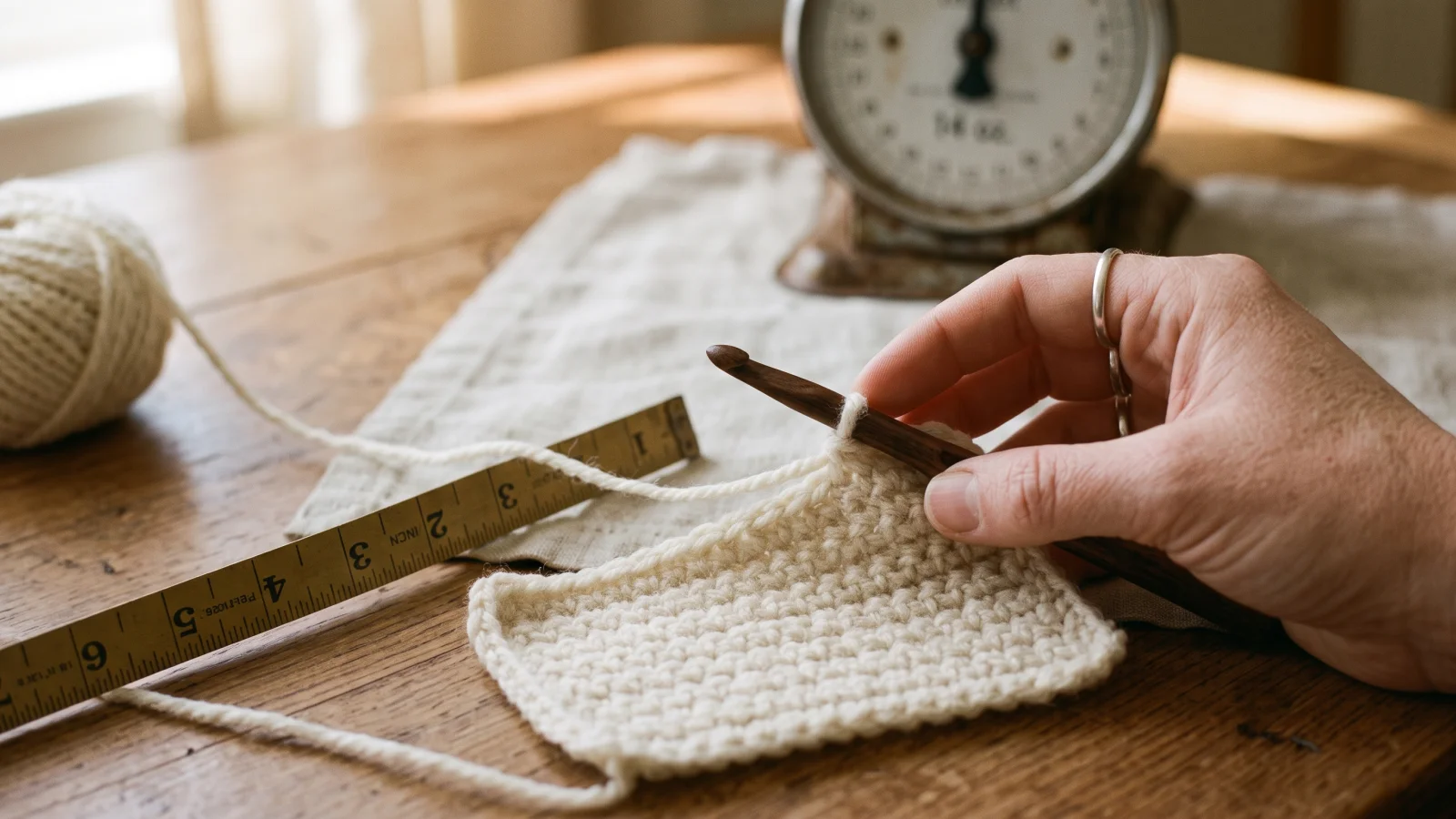
- Crochet a swatch at least 4 x 4 inches (6 x 6 inches gives you a more accurate number) using the exact yarn, hook, and stitch pattern you plan to use for the blanket.
- Track how many yards of yarn went into that swatch. If you’re pulling from a skein with a known total yardage, weigh the swatch and the leftover yarn on a kitchen scale, then use the weight-to-yardage ratio from the label to calculate yards used.
- Measure the swatch’s actual width and height once it’s blocked or relaxed, and multiply them to get its area in square inches.
- Divide the yards used by the swatch’s area. That gives you yards per square inch for this specific yarn-and-stitch combination.
- Calculate the total area of your planned blanket in square inches (width in inches x height in inches).
- Multiply the blanket’s total area by your yards-per-square-inch figure. That’s your estimated body yardage.
- Add a buffer on top for borders, edging, seaming, and mistakes. I’d build in at least 10 to 15 percent, since blocking and tension changes both eat into your total in ways that are hard to predict exactly.
As an example of how the math works — not as a number to copy — say a 4 x 4 inch swatch (16 square inches) used 10 yards of yarn. That’s 10 ÷ 16, or 0.625 yards per square inch. A 40 x 50 inch throw is 2,000 square inches, so 0.625 x 2,000 comes out to about 1,250 yards for the body, before adding a border buffer. Change the yarn, the hook, or the stitch pattern, and that 0.625 figure changes with it, so this exact result only applies to the swatch it came from.
Estimating Yardage by Blanket Size
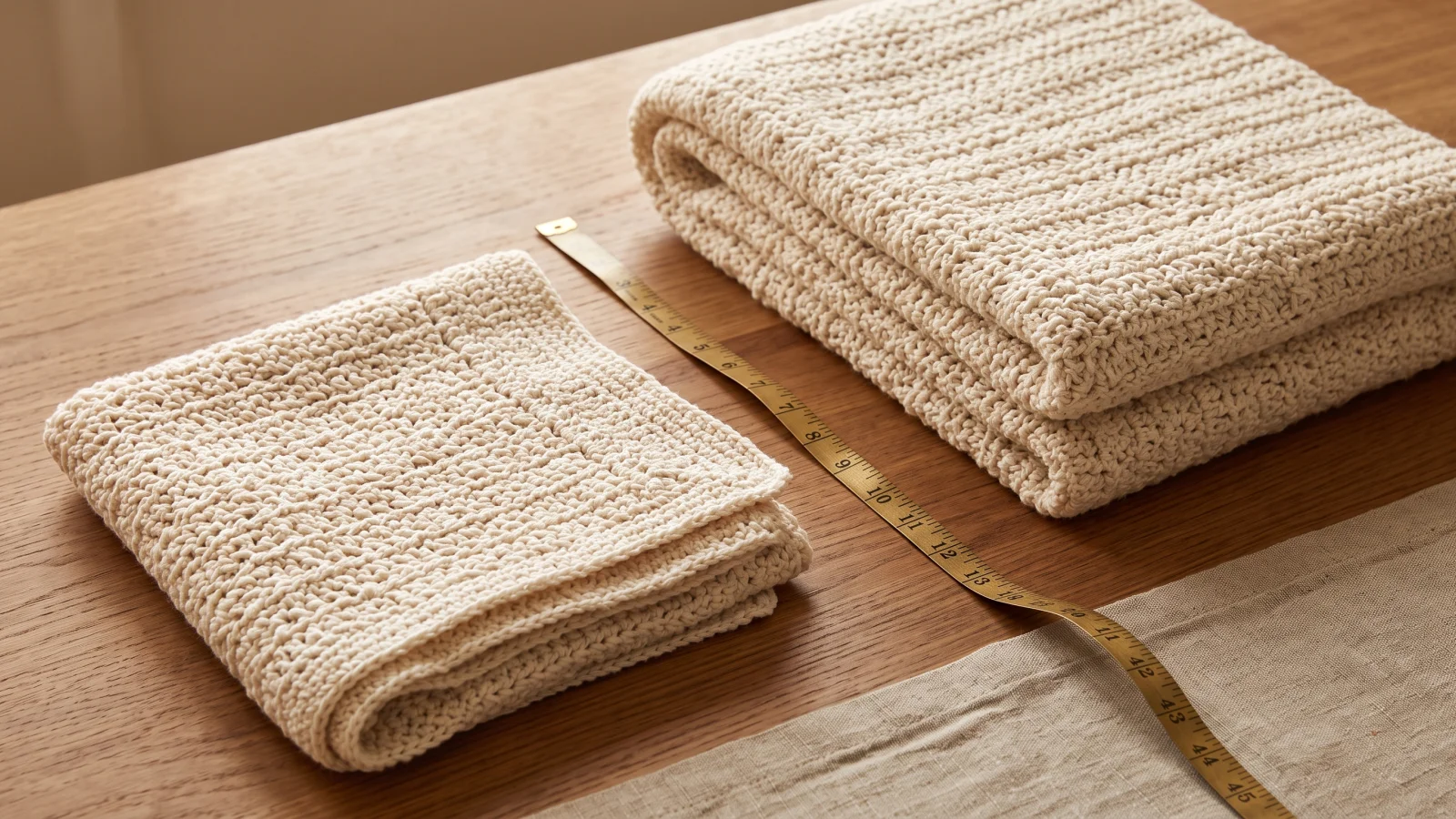
Because the calculation above is based on area, doubling the blanket’s square footage roughly doubles the yarn needed, assuming your gauge and stitch pattern stay the same. Here are commonly used finished dimensions for reference, along with the area each one works out to, so you can plug your own yards-per-square-inch figure straight in.
| Blanket Size | Typical Finished Dimensions | Approximate Area (sq in) |
|---|---|---|
| Baby blanket | 30 x 36 in | 1,080 |
| Lapghan / small throw | 40 x 50 in | 2,000 |
| Standard throw | 50 x 60 in | 3,000 |
| Twin | 66 x 90 in | 5,940 |
| Full / Queen | 90 x 90 in | 8,100 |
| King | 90 x 108 in | 9,720 |
Treat these dimensions as a reference point rather than a rule — plenty of patterns run a size or two off in either direction on purpose. If you’re specifically planning a baby blanket, my crochet baby blanket size guide goes into more detail on common finished dimensions and how they’re usually chosen.
How Yarn Weight Changes the Total
Heavier yarn weights generally need fewer total yards to cover the same area, because each stitch made with a thicker strand covers more ground, and you need fewer stitches and rows to reach the same finished dimensions. A bulky-weight throw and a sport-weight throw at the same finished size are not going to use a similar number of yards — I’d expect the sport-weight version to take noticeably more, simply because so many more stitches are involved.
That relationship doesn’t hold as cleanly for weight in ounces or grams, since a thicker strand also carries more fiber per yard. Total yardage and total weight can move in different directions when you change yarn weight, which is one more reason to swatch in the specific yarn you’re actually going to use rather than estimating from a different weight category.
Gauge and Stitch Density Change the Total Too
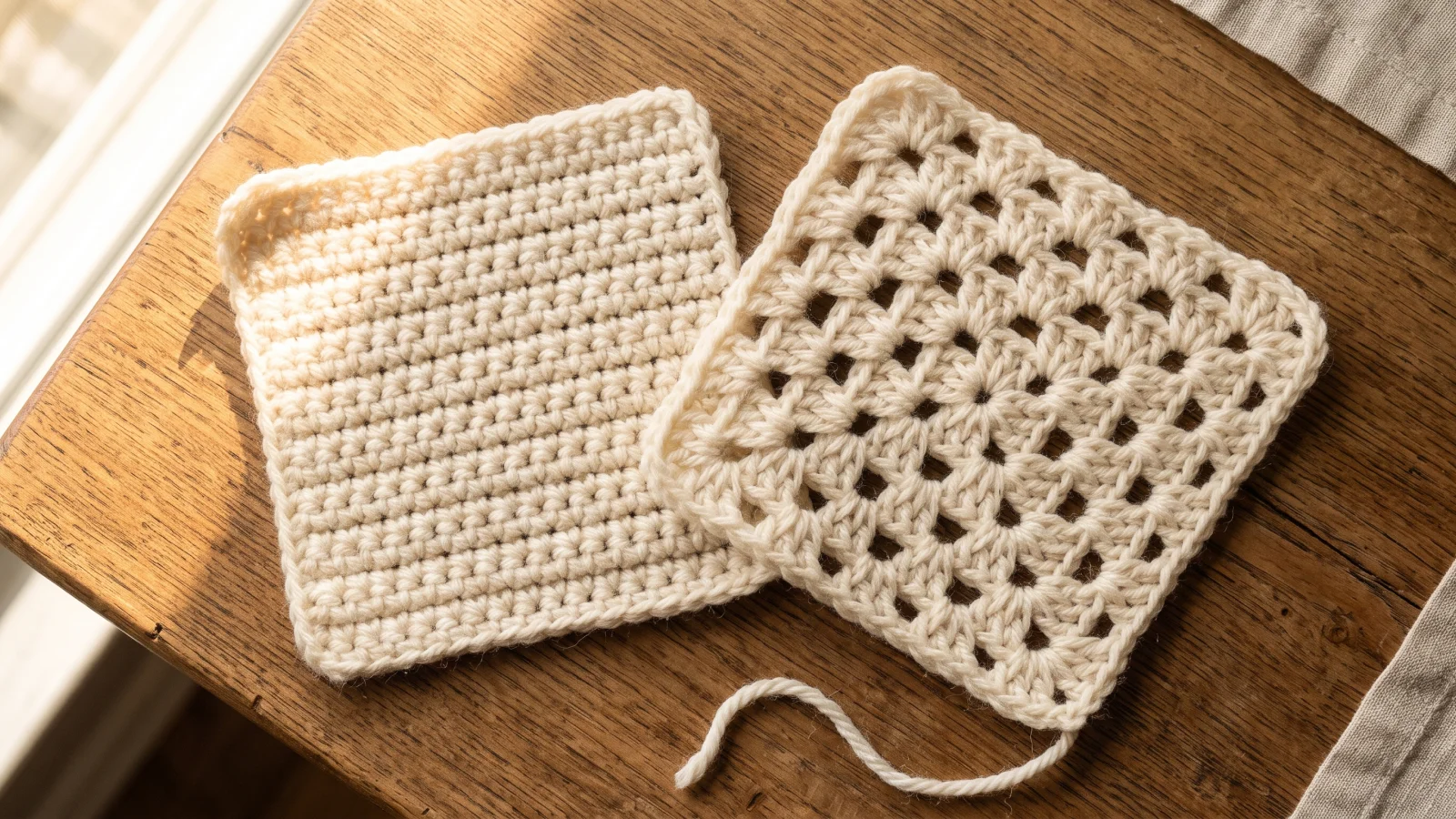
Two blankets made in the exact same yarn, at the exact same finished size, can still use noticeably different amounts of it if the stitch patterns differ in density. A dense fabric — solid single crochet, a tight granny stitch, moss stitch — packs more loops of yarn into each square inch than an open one, like a V-stitch, mesh, or a lacy shell pattern with visible gaps between motifs. More loops per square inch means more yarn consumed to cover that same square inch.
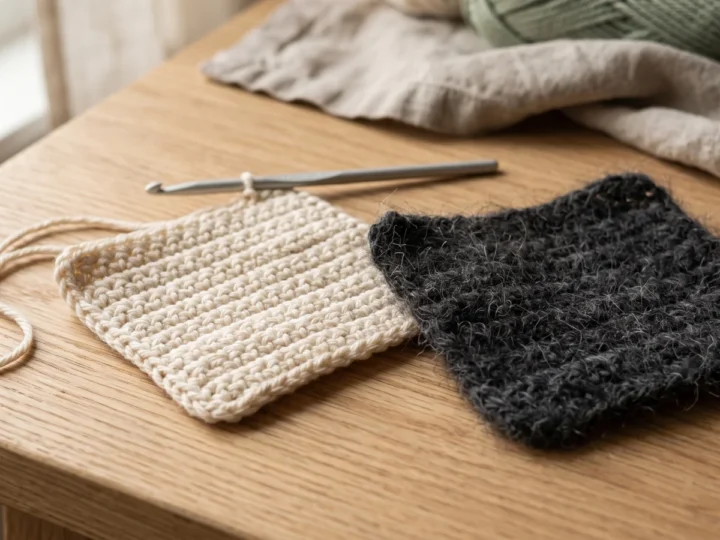
This is exactly why the swatch has to be worked in your actual stitch pattern, not just your actual yarn and hook. A gauge swatch in plain double crochet won’t tell you much about how a textured shell-stitch blanket in the same yarn is going to behave.
Trusting (and Adjusting) a Pattern’s Stated Yardage
When you’re following a published pattern, its stated yardage is usually the most reliable number you’ll find — more reliable than any general estimate — because it comes from the designer’s actual swatch, gauge, and stitch pattern rather than an average. The catch is that it only holds up if your gauge matches theirs. If your swatch comes out at a different stitch and row count over the same 4-inch measurement, your yardage will drift from the pattern’s number too, even if you use the identical yarn.
If you’re resizing a pattern rather than making it as written, you can scale its stated yardage using the same area logic from earlier: divide your new blanket’s area by the original pattern’s area, then multiply that ratio by the pattern’s stated yardage. It won’t be exact, since borders and edging don’t always scale in a straight line, but it’s a much better starting estimate than guessing.
If you want a straightforward project to practice this estimation method on, my how to crochet a simple blanket tutorial walks through a beginner-friendly design from swatch to finished edge.
How Customization Changes Yarn Usage
- Stripes and multiple colors: total yardage stays close to what a solid-color version would use, but you now need each color calculated separately, and leftover partial skeins from color changes are harder to repurpose than a single continuous color would leave you with.
- Borders and edging: these are worked separately from the body and don’t scale the same way, so calculate them on their own — swatch the border stitch along a known length, then multiply that out for the blanket’s full perimeter.
- Textured stitches: popcorn, bobble, cluster, and front-post stitches use noticeably more yarn than a plain stitch of comparable height, because of the extra wraps and connecting stitches involved. A swatch matters more here than almost anywhere else.
- Hook size changes: sizing up or down from what a pattern recommends loosens or tightens the fabric. I’d expect a looser fabric to use somewhat more yarn for the same finished dimensions, since each stitch has more slack in it, but the only way to know for certain is to swatch at the hook size you’re actually going to use.
Avoiding the Most Common Yarn-Buying Mistakes
- Substituting yarn without recalculating: if you switch to a different yarn weight or brand than the pattern calls for, the original stated yardage no longer applies, since both gauge and yards-per-square-inch shift with it.
- Buying by skein count instead of yardage: skein yardage varies by brand and fiber, so “4 skeins” from one pattern doesn’t reliably transfer to a different skein.
- Cutting the buffer too close: running out one skein short mid-blanket often means chasing down a matching dye lot later, which isn’t always possible once a batch sells out.
Frequently Asked Questions
How many skeins of yarn are needed to crochet a blanket?
It depends entirely on the skein’s yardage and your blanket’s total yardage need. Calculate your total yards using the swatch method above, then divide by the yardage printed on the skein you’re buying, rounding up. A pattern’s stated skein count only applies if you’re using the exact same skein it was written for.
How much yarn is needed for a crochet baby blanket?
Because baby blankets are smaller — often around 1,080 square inches for a 30 x 36 inch size — the total yardage will be well below what a throw or twin-size blanket needs, even in the same yarn and stitch pattern. Run the same swatch calculation using the baby blanket’s area instead. It’s also worth checking that whatever yarn you choose is machine washable, since baby items tend to need more frequent laundering, though you’ll want to confirm care instructions against the specific yarn label rather than assuming.
How many yards of yarn are needed for a blanket?
There’s no fixed figure that applies across yarn weights and stitch patterns, which is exactly why the swatch-and-area method above exists. Work a swatch in your actual yarn, hook, and stitch pattern, calculate your yards per square inch, then multiply by your blanket’s total area to get a number that’s actually specific to your project.
The short version: swatch first, calculate in yards rather than skeins, and build in a buffer before you check out. That’s the difference between an estimate that holds up and one that leaves you short two rows from the border.

Last updated . Found something out of date? Let us know.