 Accessories
 Baby & Kids
 Blankets & Afghans
 Clothing
Are Crochet Blankets Safe for Babies?
Are crochet blankets safe for babies? There is no honest yes-or-no answer, because a crochet blanket is not one thing.
 Nicole Sinclair
Published · 11 min read
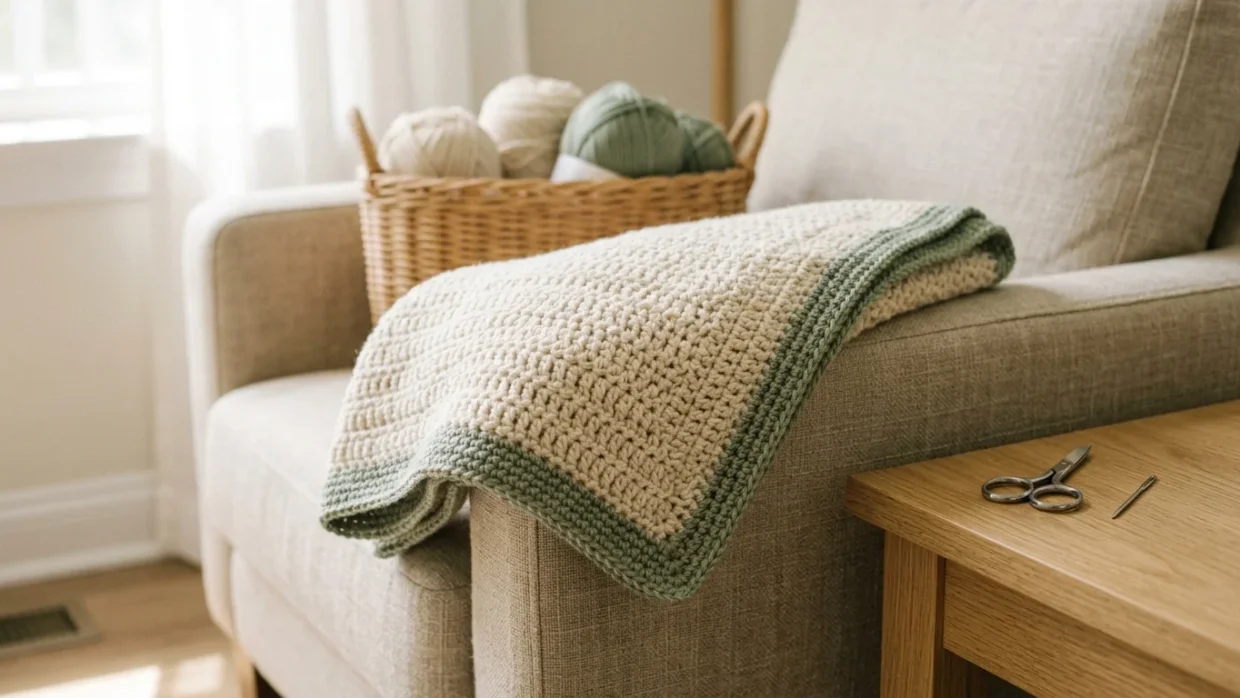
A neatly finished cream crochet blanket with a sage green border, folded over the arm of a chair in soft window light
So, Are Crochet Blankets Safe for Babies?
The accurate answer is that it depends on how the blanket is constructed, what condition it is in, and how it is used. A whole category of handmade objects cannot honestly be labeled safe or unsafe, and I would be wary of any pattern page that tries. A blanket is not automatically safer because it is handmade, soft, or made with a yarn that has baby on the label.
What crochet does give you is a set of details you can examine with your own hands. A yarn end is either secured or it is not. A decoration is either worked into the fabric or attached to it. A loop is either short and snug or long and free. The spaces in the fabric are either small or large enough to catch on something. The sections below take those in turn.
Where This Guide Stops and Pediatric Guidance Starts
This guide is written from a crocheter’s point of view. It can help you look at stitches, finishing and fabric structure. It cannot tell you whether a particular blanket suits a particular baby, and it does not address sleep at all. Questions about sleep, equipment and age-specific recommendations belong with your baby’s pediatrician and with current guidance from recognized health authorities, which is based on medical evidence and can change.
To be clear about the limits: this is not a safety certification, it is not based on laboratory testing, and it has not been reviewed by a pediatric professional.
Loose Ends and Finishing
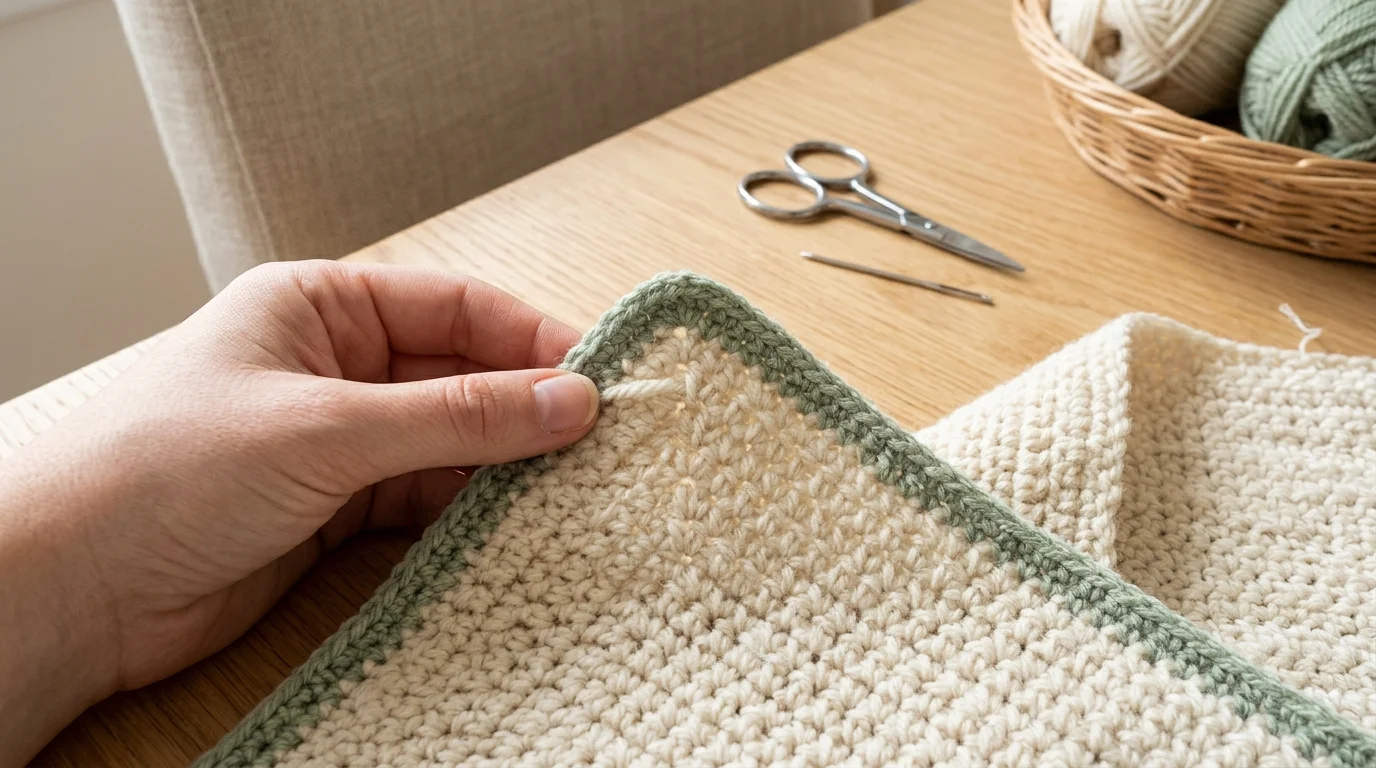
Every project has yarn ends: the starting tail, the finishing tail, and one at each color change or new skein. A tail that has only been knotted or tucked under a few stitches can work free, especially after repeated washing and handling, and a freed tail becomes a loose strand on a blanket meant for a baby.
Weaving in properly is the fix. I would thread each end onto a yarn needle and run it through the backs of the stitches, following their path rather than in a straight line, then turn and weave it back a different way so it is locked in two directions. Smooth, slippery yarns tend to release tails more readily than fuzzy ones, so they deserve extra passes. Tug gently before trimming, then cut the end close to the surface without pulling the fabric.
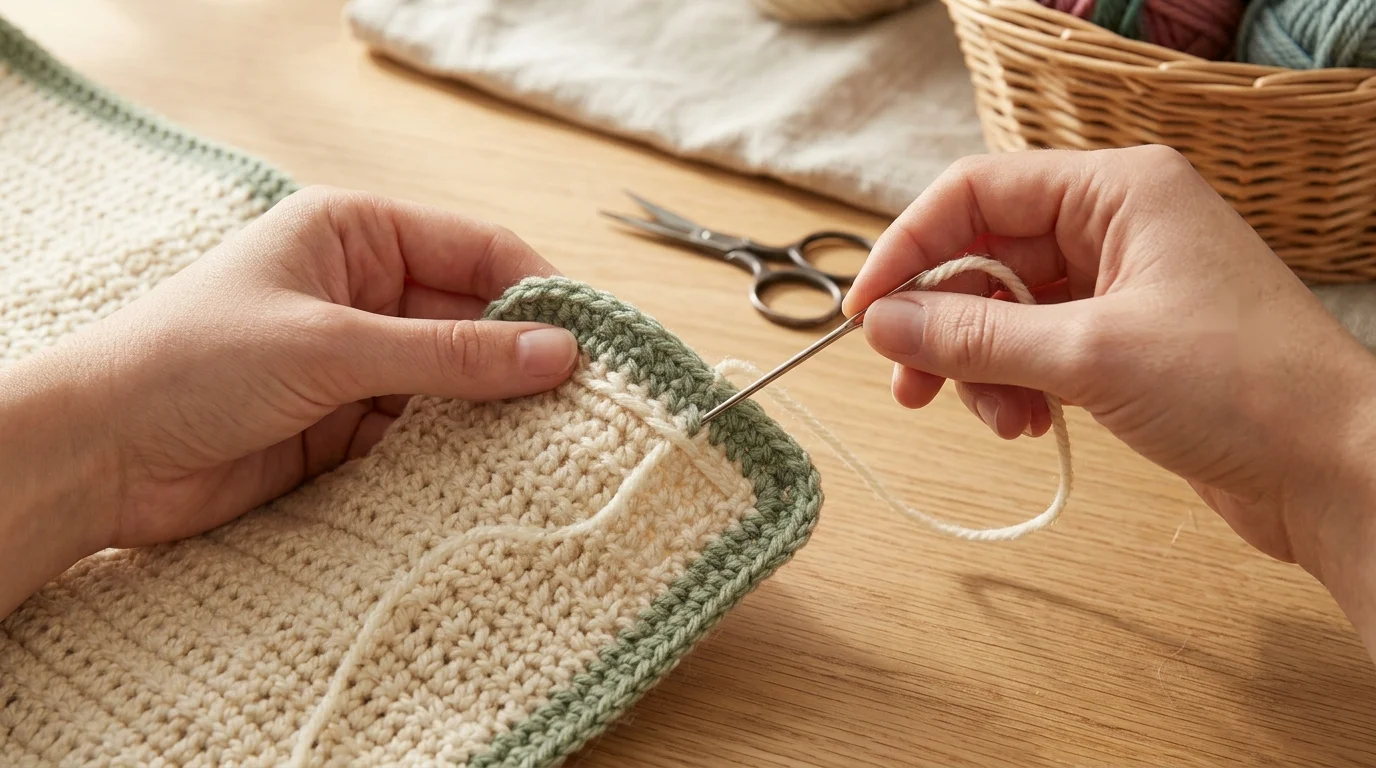
Joins in the middle of the blanket need the same care. At a color change or new ball, weave the old and new strands into the fabric instead of tying a knot, which can form a lump and loosen in the wash. Corners and borders deserve a second look, because that is where ends tend to collect.
Detachable Decorations and Attachments
This is the simplest category to explain, because the risk is built into the design. Buttons, bows, pom-poms, tassels, sewn-on flowers, appliqués, ribbon, ties and fringe are separate parts added to the fabric, and anything attached separately can, in principle, come off.
I cannot tell you that a button sewn on a certain way will stay put, because stitching wears, yarn stretches and laundry is rough. The honest position is that each attached element is a part that could detach, and I would leave them off anything intended for a baby. For visual interest, work it into the fabric: a contrasting border in the same yarn, a color change, or texture built from stitches that lie flat.
Fringe deserves its own mention because it looks harmless. Long fringe is really a group of loose strands, each held by a knot. A worked-in border is a sturdier way to finish an edge.
Long Loops and the Stitches That Create Them
Loops can catch things, and the longer and looser they are, the more they can catch. Small fingers and toes, jewelry and buttons can all slip into a large loop or snag on a pulled one. Your pediatrician is the right person to ask how much that matters for a particular baby; the crochet side is easy to see.
Some constructions create long loops on purpose, such as loop stitch, fur stitch and chain-loop edgings. Others create them by accident: a hook that is too large for the yarn, uneven tension that leaves one stitch stretched, floats of yarn carried across the back in colorwork, or long spike stitches sitting loosely over the fabric. Novelty yarns with loops or long fuzz add another problem, because they hide the stitches and make inspection harder.
I am deliberately not giving you a list of banned stitches. The same stitch can be snug in one yarn and floppy in another. Look at the finished fabric instead: do the stitches sit flush, and could anything be hooked and pulled outward? If so, adjust the tension, the hook or the design.
Open Construction: Holes, Mesh and Gaps
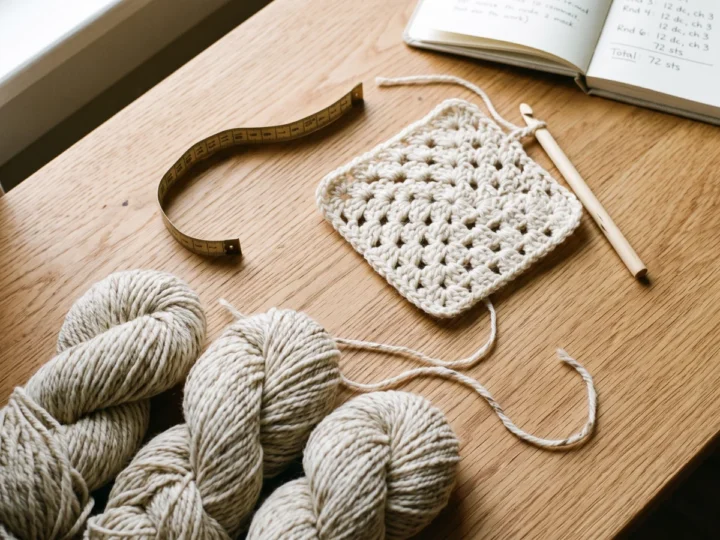
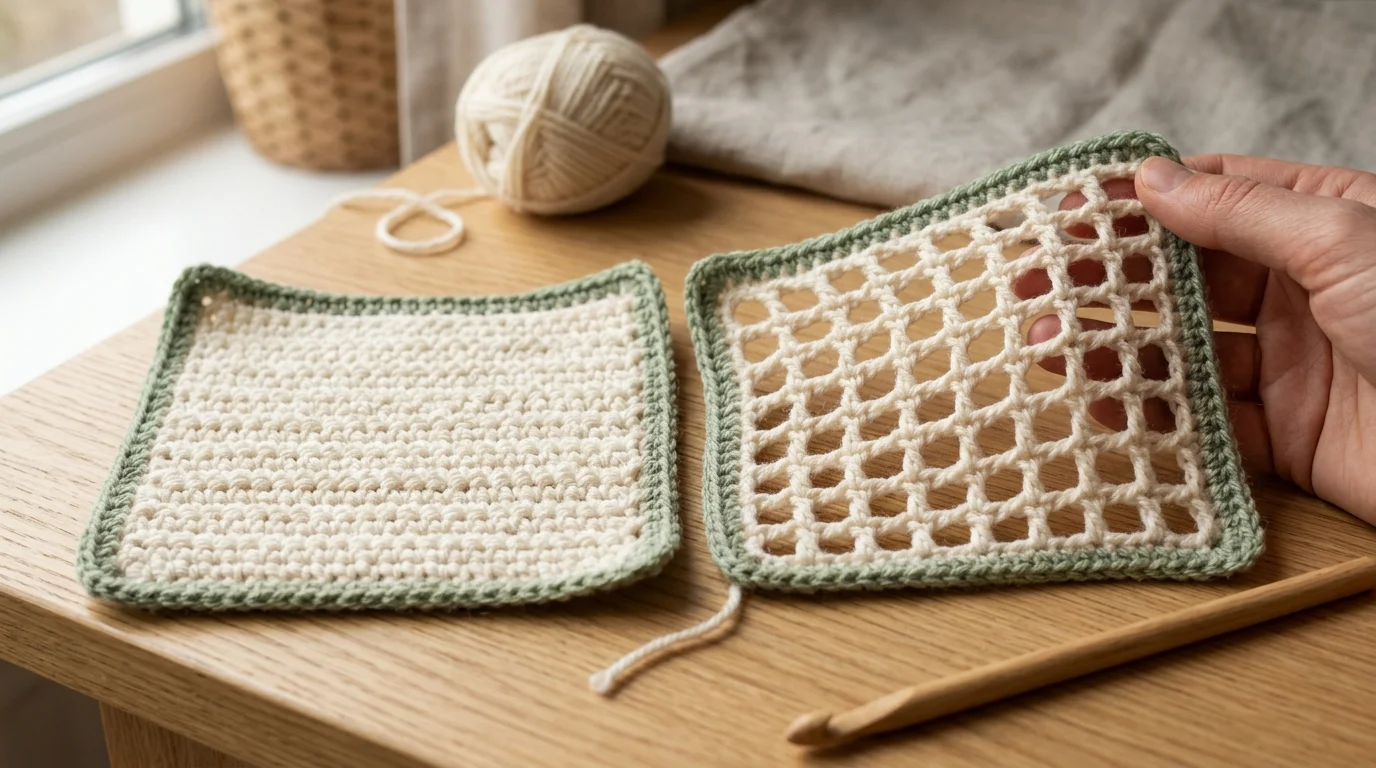
Lace patterns, filet mesh, open granny squares, and anything worked with a large hook on lightweight yarn create gaps. Gaps are not automatically a problem, but they change what the fabric can catch, and they are often larger than they look when the blanket lies flat.
Crochet fabric stretches, and open stitches stretch more than dense ones. So I would not judge a lacy blanket on a table. Hold it, pull gently in the direction it stretches, and look at how large the spaces become. Then wash it as you would in use and check again, because some fabrics relax and gape after laundering.
I will not give you a hole-size threshold, because I cannot cite a verified standard and an invented number would only create false confidence. If the spaces look large to you, that is reason enough to keep the blanket for another use, such as a wall hanging or keepsake, and to choose a denser stitch and smaller hook next time.
Choosing an Appropriate Use for a Crochet Blanket
The same blanket can be a reasonable choice in one situation and a poor one in another. A newborn who cannot move around interacts with fabric very differently from a mobile baby who grabs, pulls and drags things, so it helps to think about context instead of looking for one verdict.
| Use context | What to check in the crochet | Where to look for guidance |
|---|---|---|
| Supervised awake time, on a caregiver’s lap or a floor mat | Secure ends, no attached parts, no long loops, fabric that does not stretch into large gaps | Your own judgment as the person watching, plus your pediatrician’s advice |
| Stroller or car seat | Bulk, and how the blanket sits around straps and seat parts | The stroller or car seat manufacturer and your pediatrician |
| Sleep spaces | This guide does not address sleep | Your pediatrician and current safe-sleep guidance from recognized health authorities |
| Keepsake, photo prop or display piece | Overall finish; attachments are less of a concern when the item stays out of a baby’s reach | Your own preferences |
Nothing in that table is a yes or no, on purpose. What changes from row to row is how long the blanket is in contact with a baby, how closely someone is watching, and whether other equipment is involved. That is why decorations and loops matter more in some situations than in others.
If you are giving a blanket to someone else’s baby, include the fiber content, the care instructions from the yarn label, and a reminder to follow their pediatrician’s advice about use.
Size, Yarn and Care in General Terms
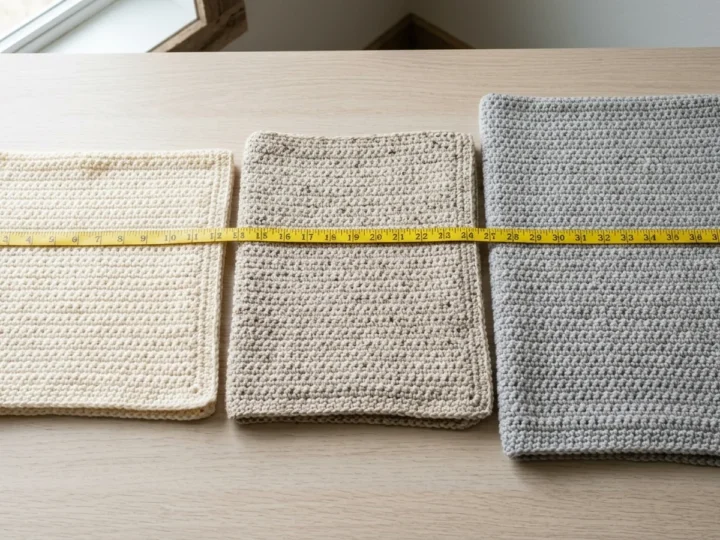
Size only matters in relation to use. A small square is easier to inspect and wash than a large throw, while a larger blanket has more ends and more border to check. I would not treat any particular dimensions as safe or unsafe.
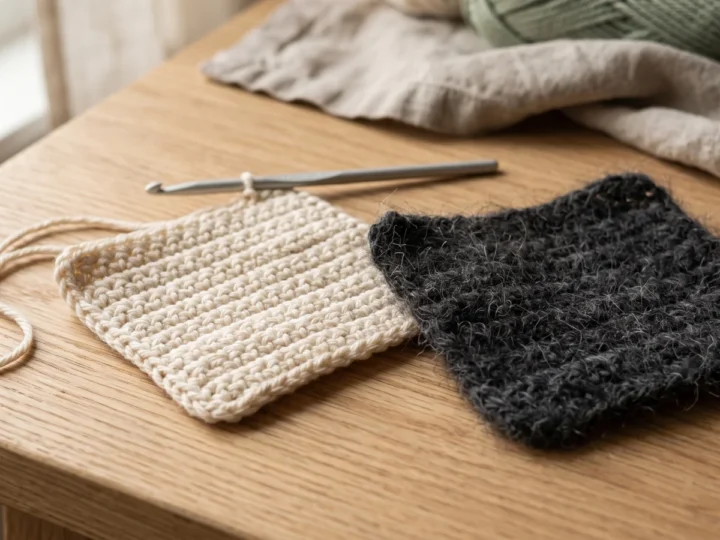
I would not name a safest fiber either, because I do not have verified evidence to support one. Read the label for fiber content, weight and care instructions; a baby label on yarn generally describes softness and washability, not safety. Baby items are laundered often, so choose a yarn you can wash as directed, and be cautious with yarns that shed or pill heavily. Washing can loosen ends and change the fabric, so inspect the blanket again afterward.
Customizations I Would Skip on a Baby Blanket
If you are adapting a pattern, these are the changes I would avoid:
- Adding tassels, fringe, pom-poms, bows, ribbon or ties.
- Sewing on buttons, appliqués, flowers or animal shapes.
- Swapping a dense stitch for an open lace stitch, or using a much larger hook than the pattern calls for to work faster.
- Adding loop stitch, fur stitch or long chain-loop edgings.
- Carrying long floats of yarn across the back for color changes.
Rely on integrated details instead: a worked-in border, stripes with ends properly woven in, or texture that lies flat. The blanket can still look personal without a single attached part.
A Pre-Use Inspection Routine
Set aside a few minutes for this, and repeat it after washing and every so often while the blanket is in use.
- Lay the blanket flat in good light and look at both sides, including every edge and corner.
- Follow each yarn end you can find and tug it gently. If it moves, weave it in again.
- Check the border and the joins between rounds or sections, where stitches are most likely to be stretched or pulled.
- Stretch the fabric gently in the direction it stretches and look at how large the spaces become.
- Run a hand over the surface and look for loops, pulled stitches or snags, then fix or rework them.
- Check that nothing is attached: no buttons, ties, ribbon or embellishments.
- Wash the blanket following the yarn label, dry it as directed, and repeat steps one through five.
Fix any problem before the blanket is used. If the problem is hard to fix, such as fabric that is simply too open, that is useful information, and the blanket may be better as a keepsake or wall hanging.
Fixing Common Construction Problems
Loose finishing ends
Thread the tail onto a yarn needle and weave it through the backs of nearby stitches in one direction, then back in another. If the end is too short to thread, sew a length of matching yarn through the surrounding stitches and weave that in instead, catching the short end underneath. Tug gently to test it.
Detached embellishments
If a decoration has come off or looks loose, my recommendation is to remove it instead of resewing it. Cover any mark it leaves with a few duplicate stitches in matching yarn, or replace it with something worked into the fabric, such as a simple border row.
Excessively open fabric
Open fabric is hard to correct after the fact, because the gaps come from the stitch pattern, hook size and yarn together. If you notice it early, reworking with a smaller hook or a denser stitch is the cleaner fix. If the blanket is finished, consider a wall hanging, a keepsake, or a throw for an adult, and start a denser one for the baby.
Unsecured attachments
Ties, ribbons, cords and other attachments that are not part of the crochet should come off unless you have a specific reason to keep them. If you want the effect, crochet it into the border and weave in every end. Then check the spot again after the next wash.
Frequently Asked Questions
Can crochet blankets be used around babies?
Many people use them, but no one can give you a blanket-wide guarantee, and that includes this article. What matters is how the blanket is constructed, what condition it is in, how it is used, and whether the baby is supervised. Check the finishing, leave off attachments, and follow your pediatrician’s advice for anything involving sleep or equipment.
What crochet details should be avoided?
The ones this guide keeps coming back to: loose or unsecured yarn ends, attached decorations of any kind, long or loose loops, fringe, and very open fabric. I would not name a stitch as banned, because tension, yarn and hook size change how any stitch behaves. Judge the finished fabric.
When should readers follow pediatric guidance?
Any time the question goes beyond how the crochet is made: sleep, car seats, strollers, age-specific recommendations, allergies or skin sensitivities. Pediatric guidance takes priority over anything in a crochet article, and if the two ever seem to conflict, follow your pediatrician.
Where to Go Next
If you want a project to apply these ideas to, browse our crochet newborn blanket patterns or start with an easy baby blanket crochet pattern as a straightforward base to work from. Whichever you choose, check the construction against the sections above, and run the inspection routine on the finished blanket before it is used around a baby. A careful finish matters more than any particular stitch.

Last updated . Found something out of date? Let us know.