 Accessories
 Baby & Kids
 Blankets & Afghans
 Clothing
How to Crochet the Blanket Stitch
If you are trying to work out how to crochet blanket stitch and every tutorial seems to say something slightly different, this page teaches one exact version: a repeat of one single crochet and two double crochets worked into the same stitch, on a foundation chain that is a multiple of 3.
 Nicole Sinclair
Published · Updated · 10 min read
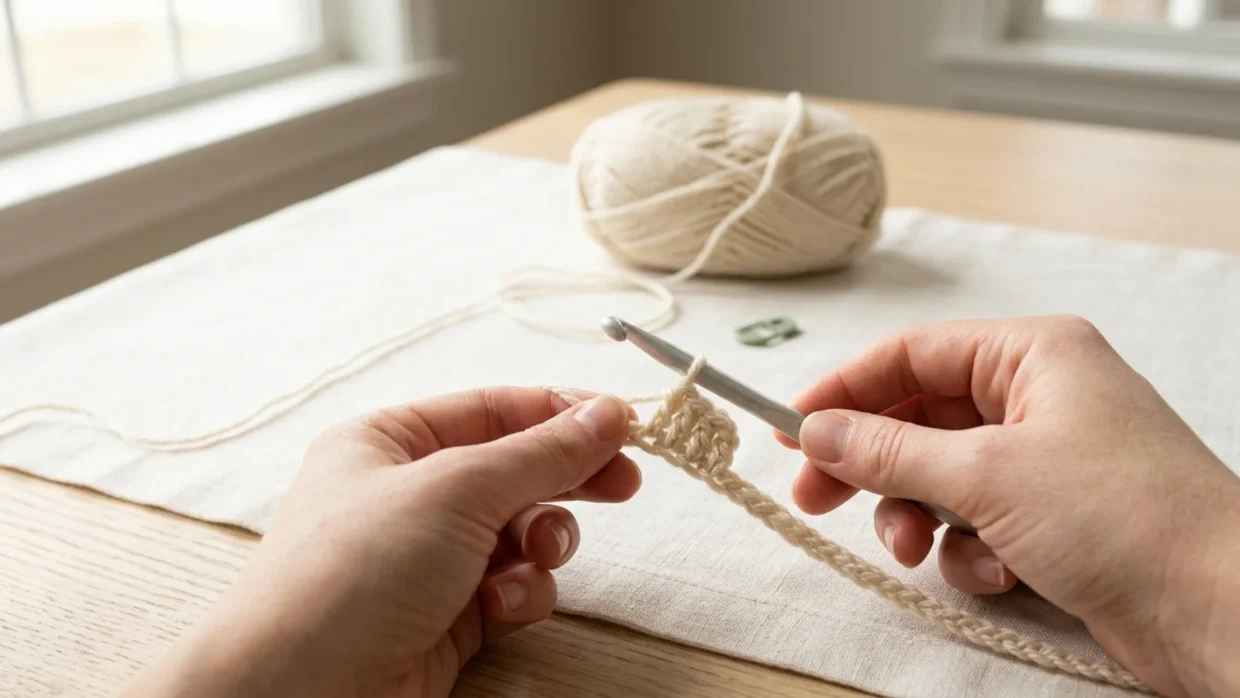
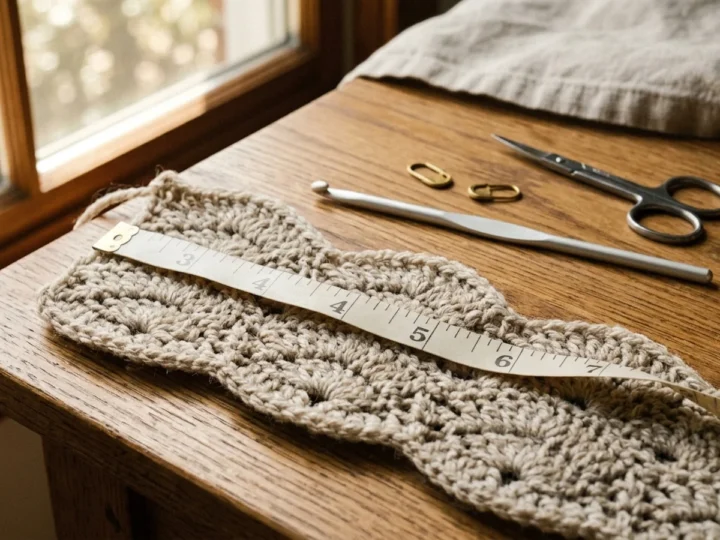
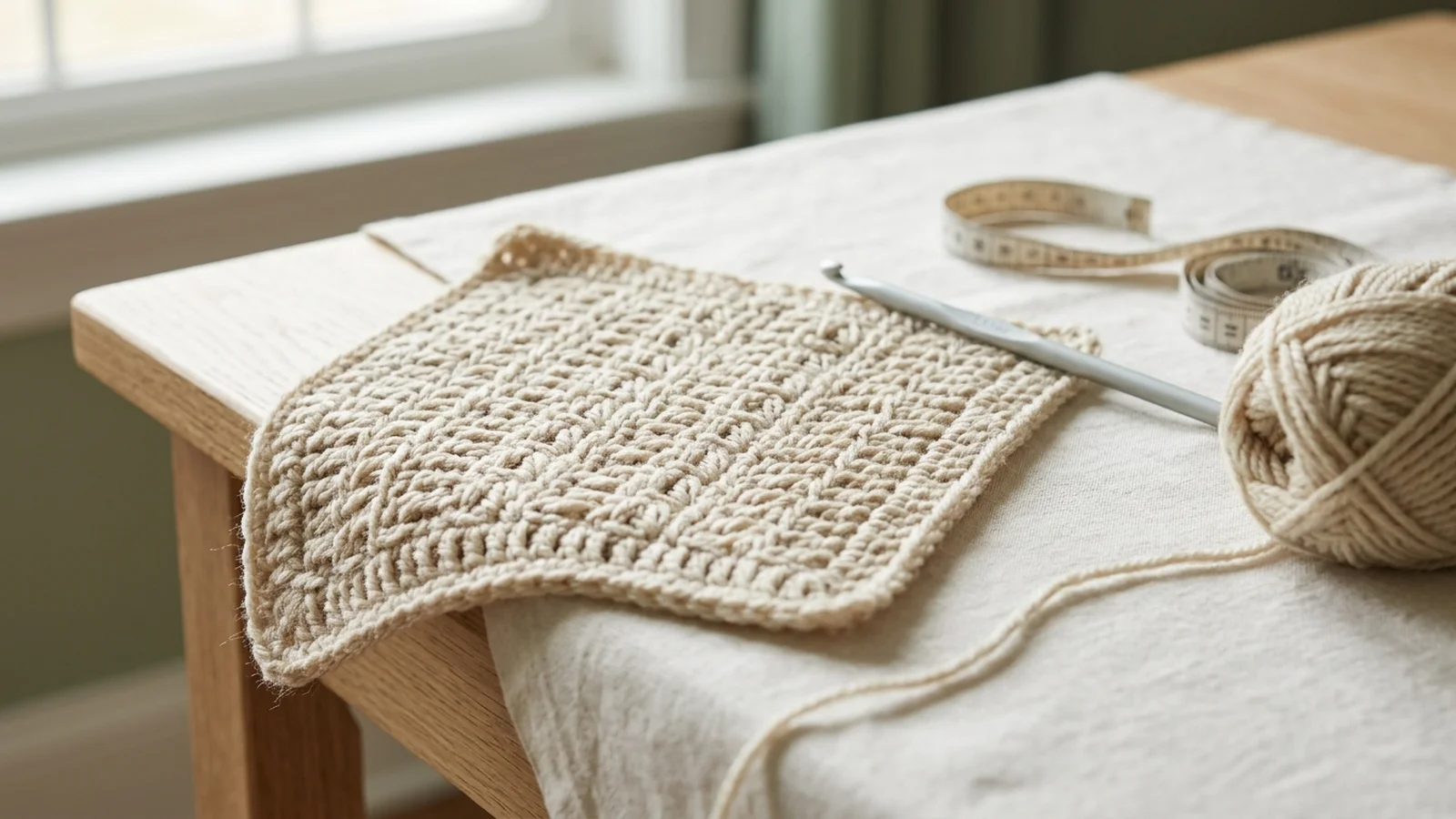
A practice swatch of blanket stitch in cream worsted yarn, showing the repeating single crochet and double crochet clusters
Which blanket stitch this tutorial teaches
The name is not standardized, which is why so many people end up with a row that does not match the tutorial in front of them. In crochet, “blanket stitch” can mean:
- A textured fabric stitch made of repeating groups of one single crochet and two double crochets. This is the version taught here.
- A decorative edging worked around finished fabric to imitate embroidered blanket stitch.
- A look-alike name for a different fabric stitch, such as block stitch or another cluster stitch, that uses different stitch groups and chain spaces.
The construction on this page: chain a multiple of 3, work [sc, 2 dc] into the same stitch, skip the next 2 stitches, and repeat. Turn with ch 2, which does not count as a stitch. Every row after the first begins with 2 dc in the first stitch and ends with 1 sc in the top of the ch-2 that began the row below.
If another pattern asks for a different foundation chain, such as a multiple of 3 plus 1 or 2, it is counting differently. It may count the turning chain as a stitch, start with a different first row, or describe another stitch entirely. I would not mix its numbers with the instructions here. Pick one source per project and follow its counting from the first chain to the last row.
Skills and materials you need
This is an easy crochet blanket stitch, but it is not zero-skill. You should be comfortable making chains, working single crochet and double crochet, putting more than one stitch into the same stitch, and spotting the top of a stitch. There is no shaping and no seaming. The real difficulty is the edge, where the last single crochet of each row goes into a turning chain rather than a regular stitch. Most of the troubleshooting below traces back to that spot.
For a practice swatch I would use smooth, solid, light-colored worsted weight (#4) yarn and a 5.5 mm (I-9) hook, plus two stitch markers and a tapestry needle. These are suggestions, not requirements. Smooth, light yarn simply makes stitch tops easy to see, while dark or fuzzy yarn hides the details you are learning to read. Cotton gives a firmer fabric with less stretch than most acrylics, so the same chain can finish at a slightly different width.
If the bottom edge of your swatch pulls in, make the foundation chain with a hook one size larger, then switch back for the rows.
Abbreviations
- ch: chain
- sc: single crochet
- dc: double crochet
- st(s): stitch(es)
- sk: skip
- rep: repeat
- *: repeat the instructions that follow from the asterisk
- [ ]: work everything inside the brackets into the same stitch
These are US terms. In UK terminology, a US double crochet is a treble crochet and a US single crochet is a double crochet, so check which system a pattern uses before you begin.
How the repeat works
Each cluster is one sc followed by two dc, all worked into the same stitch. Putting three stitches into one place would ruffle the fabric, so you skip two stitches beside it. One worked stitch plus two skipped stitches equals three stitches of the row below, which is why the foundation chain is a multiple of 3.
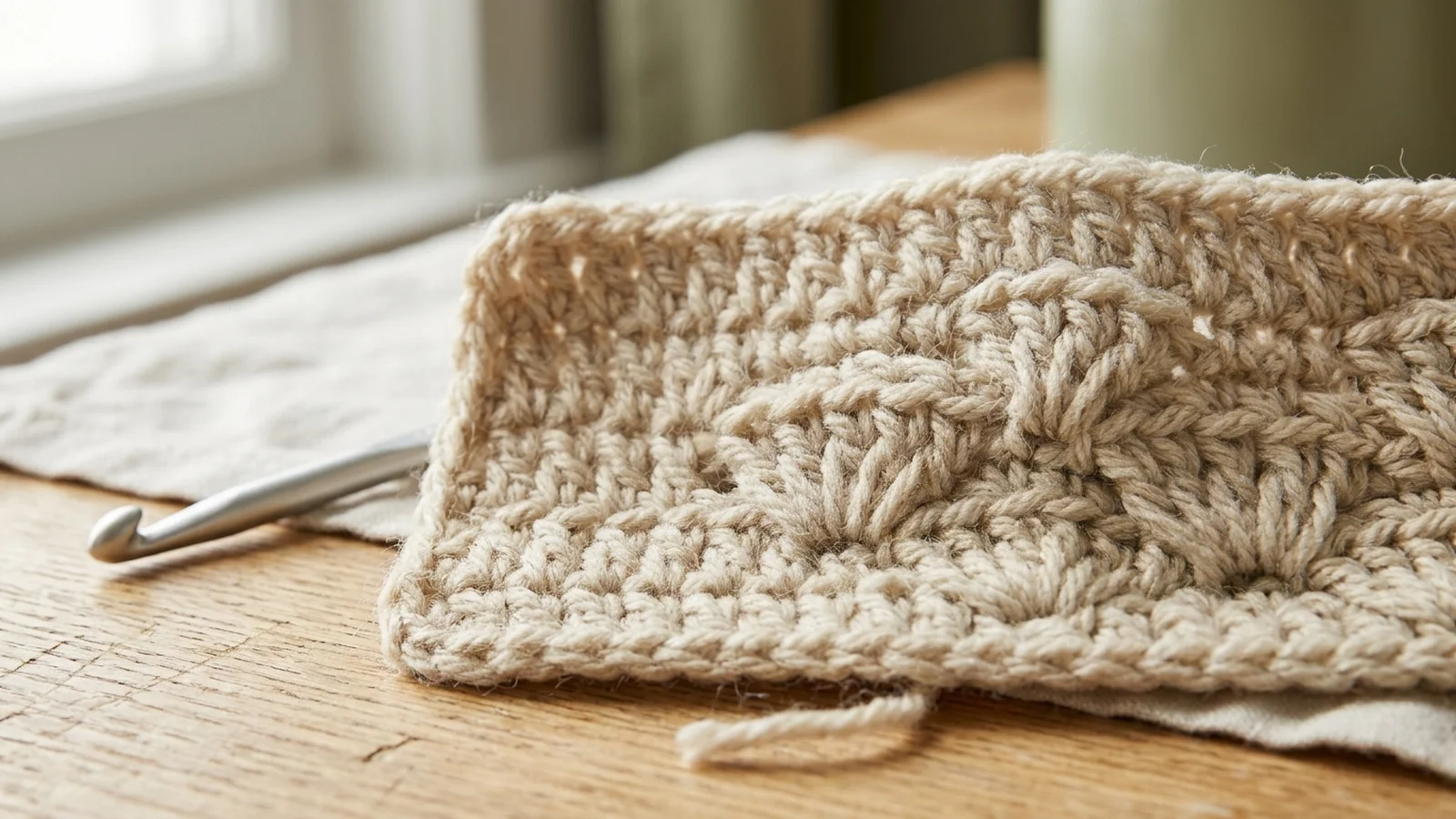
In the finished fabric, the single crochets stack in vertical columns and each pair of dc leans over the two stitches you skipped. A correct row reads dc, dc, sc, dc, dc, sc and so on, beginning on a pair of dc and finishing on a single sc.
How to crochet blanket stitch, row by row
The swatch below has 9 repeats: a foundation chain of 30 and 27 stitches in every row. Work at least six rows before judging the fabric. The pattern becomes much easier to read once several rows are stacked.
Row 1: working into the chain
Row 1: Ch 30. 2 dc in the 3rd ch from hook, sk next 2 ch, *[sc, 2 dc] in next ch, sk next 2 ch; rep from * 7 more times (8 clusters in total), sc in last ch. Ch 2, turn. (27 sts)
- Chain 30. The two chains nearest the hook act as the edge chain and are not stitches.
- Work 2 dc into the 3rd chain from the hook. This is your opening pair.
- Skip the next 2 chains, work [sc, 2 dc] into the next chain, then skip 2 chains.
- Repeat step 3 until you have made 8 clusters and one chain remains.
- Work 1 sc in that last chain, then ch 2 and turn.
Count before you continue. The opening 2 dc, 8 clusters of 3 stitches and the final sc make 27 stitches, of which 9 are sc and 18 are dc.
Row 2 and every row after
Row 2: 2 dc in first st, sk next 2 sts, *[sc, 2 dc] in next st, sk next 2 sts; rep from * 7 more times (8 clusters in total), sc in top of the turning ch-2 that began the row below. Ch 2, turn. (27 sts)
Rows 3–6: Rep Row 2. (27 sts each row)
- Work 2 dc into the first stitch, which is the sc that ended the last row.
- Skip the next 2 stitches, which are the two dc.
- Work [sc, 2 dc] into the next stitch, an sc, then skip the next 2 stitches.
- Repeat step 3 until you have made 8 clusters.
- Skip the last 2 stitches and work 1 sc in the top of the ch-2 that began the row below.
Because every row after the first uses the same sequence, you only ever need to remember one row.
Turning and edge stitches
The turning chain is 2 chains and does not count as a stitch, so the first stitch of every row is worked into the very last stitch of the row before. That gives every row the same two edges: a pair of dc at the start and a single sc in a ch-2 at the finish.
The ch-2 for the ending sc is the one that began the row below, standing beside the pair of dc you just skipped. Insert your hook into its top chain, the one farthest from the fabric. I would put a stitch marker in that chain as soon as you turn, then remove it once the next row is finished, so you never have to hunt for it.
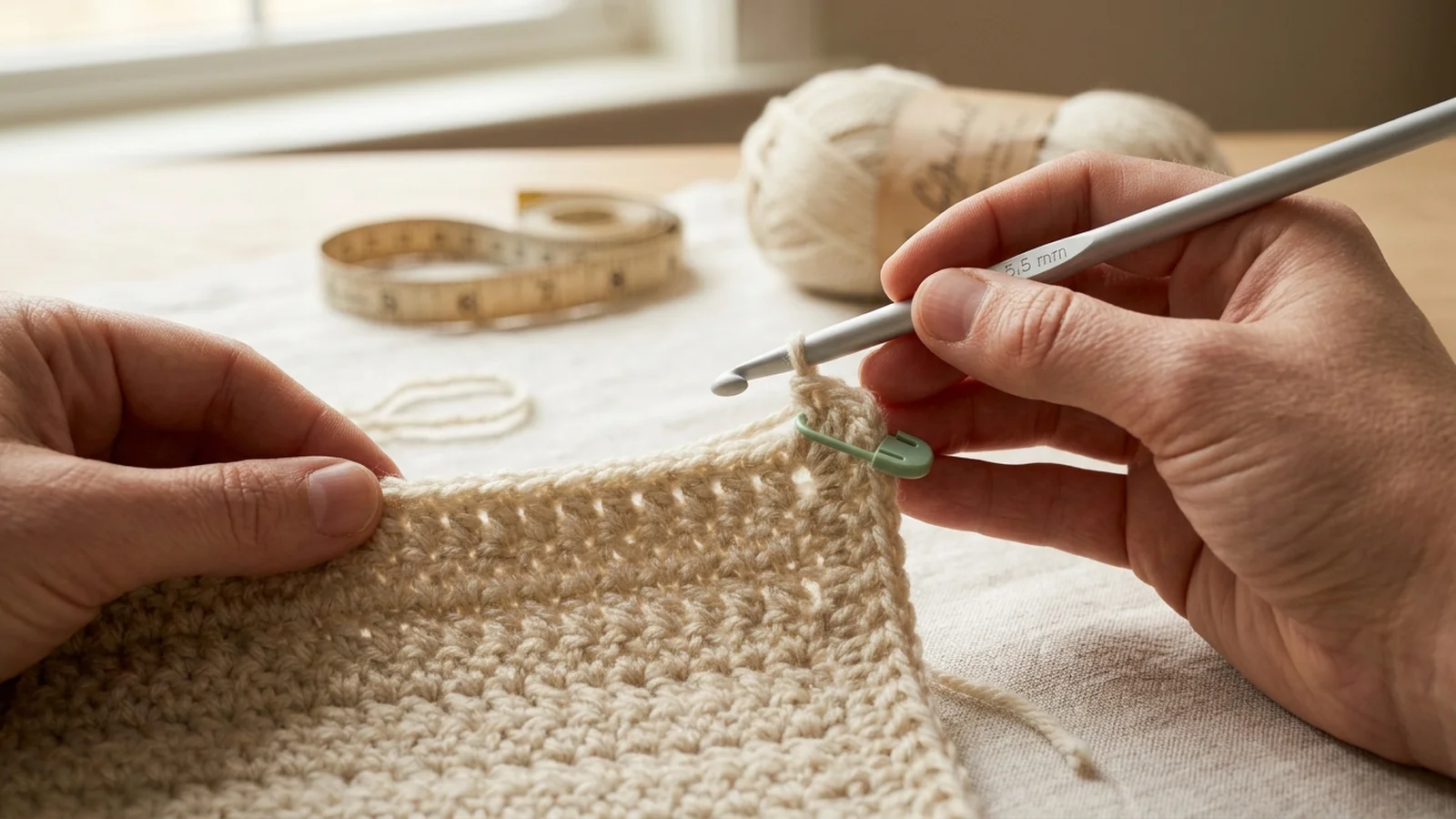
Counting each row
Two quick checks keep the repeat honest. First, count the single crochets: a 27-stitch row always has 9. Second, when you finish your 8th cluster, exactly 2 stitches should remain before the ch-2. If you find 1 or 3 instead, a cluster went into the wrong stitch or a stitch was skipped earlier in the row. Check after Row 1 and again every few rows. Correcting a miscount three rows back is far easier than correcting it after twenty.
| Swatch detail | Count |
|---|---|
| Foundation chain | 30 ch |
| Repeats across the row | 9 |
| Stitches per row | 27 |
| Full [sc, 2 dc] clusters per row | 8 |
| sc per row | 9 |
| dc per row | 18 |
| Turning chain | ch 2, not a stitch |
Using the stitch for a full blanket
For a blanket, decide how many repeats wide you want. The foundation chain is 3 × (repeats + 1), and each row then has 3 × repeats stitches. Everything else stays the same.
| Repeats | Foundation chain | Stitches per row | sc per row | dc per row |
|---|---|---|---|---|
| 9 | 30 | 27 | 9 | 18 |
| 12 | 39 | 36 | 12 | 24 |
| 20 | 63 | 60 | 20 | 40 |
| 24 | 75 | 72 | 24 | 48 |
To find your repeat count, make the swatch, lay it flat without stretching, and measure across several repeats. Measuring a single repeat is unreliable. Say, purely as an example, that one repeat measures 1¼ inches and you want a 30-inch width. 30 ÷ 1.25 gives 24 repeats, so you would chain 75 and work 72 stitches per row. Your yarn and hook will give a different number, so measure your own swatch.
Gauge differences mostly change the finished dimensions of a blanket rather than its fit, but tension that drifts partway through can make the width wander. To estimate yardage, weigh the swatch, compare its area with your target blanket area, and scale up, then add extra for the border and a safety margin.
Is this the right stitch for your blanket?
The one-row repeat is easy to memorize, and double crochet clusters grow the fabric quickly. The result is a textured, closed fabric rather than open lace, though its drape will depend on your yarn and hook. The tradeoff is that the count and the edge need attention on every row. If you are still comparing options, my guide to the best crochet stitch for a blanket places this stitch beside other choices. For a baby blanket, I would choose a soft yarn with a machine-washable care label and check that label rather than assume.
Finishing is short. Weave in the ends, then add a border if you want a cleaner outline. One round of sc worked evenly around the blanket, with extra stitches in each corner, tidies all four edges. Check that the corners lie flat before you continue.
Troubleshooting
The blanket gets wider or narrower
This is almost always a missing or extra edge stitch. If you skip the ending sc, a 27-stitch row drops to 26 and the edge pulls in. If you work an extra stitch at the start, the row grows to 28 and the edge flares. Count your total at the end of each row until the edge becomes automatic.
Clusters land in the wrong stitches
Each cluster goes into an sc. If you put one into a dc, the sc column shifts by one stitch and every later row inherits the shift. Identify the sc stitches on the row below before you insert. If the mistake is only a few stitches back, unravel to it. If it is several rows back, decide whether the shift is visible enough to justify redoing them.
Your counts differ from another tutorial
Compare the foundation chain formula, whether the turning chain counts as a stitch, and how the first row begins. Different totals do not mean one source is wrong. They can mean a different stitch definition. Use one source’s counts all the way through.
The bottom edge is tighter than the rest
A tight foundation chain is common. Redo the chain with a hook one size larger and keep the same hook for the rows.
Related stitches to compare
If you want to compare this fabric with one worked in shells, see my crochet shell stitch blanket pattern. Shell fabrics use a different repeat and stitch count, so keep each pattern’s chain formula with its own instructions.
Frequently asked questions
What is the blanket stitch in crochet?
In the version taught here, it is a textured fabric stitch made by working one single crochet and two double crochets into the same stitch, skipping two stitches, and repeating across rows on a foundation chain in a multiple of 3. The same name is also used for an edging that imitates embroidered blanket stitch and, loosely, for some other stitches, so check the stitch group in any pattern before you start.
Is blanket stitch good for blankets?
It can be, with conditions. The one-row repeat makes it easy to keep going, the fabric is closed rather than lacy, and double crochet clusters build height quickly. Against that, you have to protect the count and the edge on every row, and the drape depends on your yarn and hook, so I would swatch before committing to a full blanket. If you dislike counting, a stitch with a simpler edge may suit you better.
How do I keep blanket-stitch edges straight?
Three habits do most of the work. Always end the row with the sc in the top of the ch-2 that began the row below, and never skip it. Mark that chain when you turn. Count your stitches at the end of the row and expect your exact total. If a row comes out short or long, find the shift right away rather than several rows later.

Last updated . Found something out of date? Let us know.