 Accessories
 Baby & Kids
 Blankets & Afghans
 Clothing
What Crochet Stitch Is Best for a Blanket? A Practical Comparison
If you are wondering what crochet stitch is best for a blanket, the honest answer is that it depends on whether you care most about speed, warmth, drape, yarn use, or ease. Here is how six common stitches compare, and how to choose one for your own blanket.
 Nicole Sinclair
Published · 11 min read
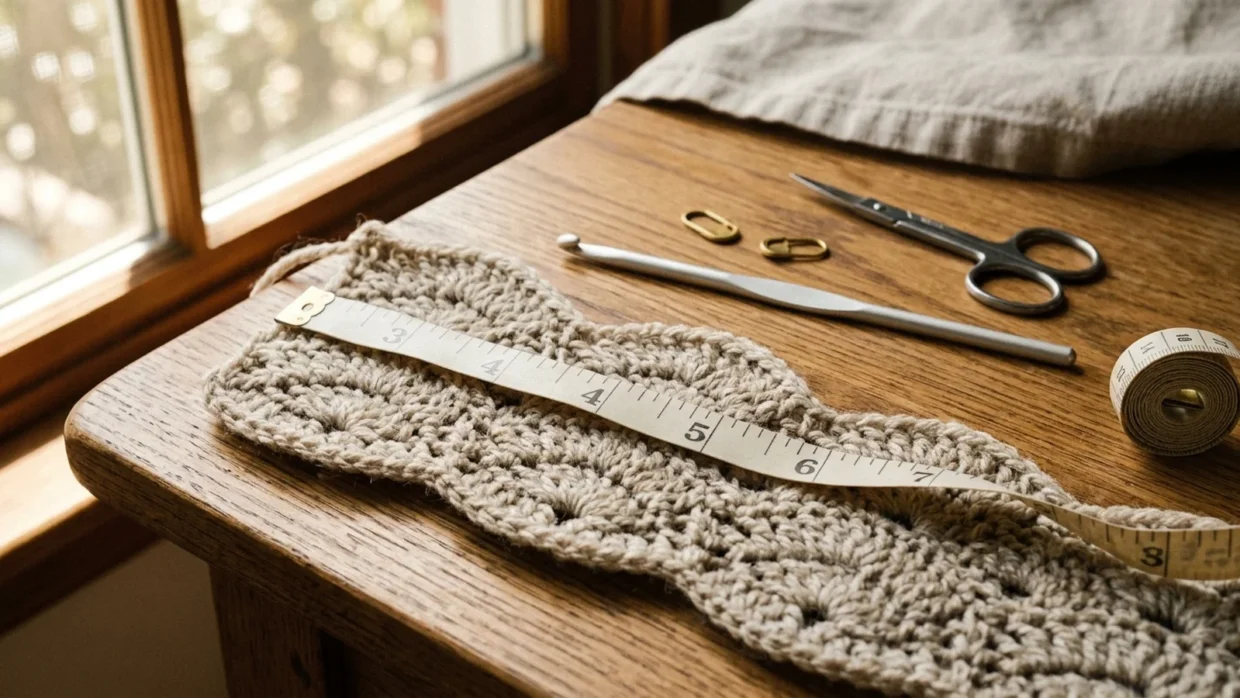
Six blanket stitch swatches worked in the same oatmeal worsted-weight yarn on a wooden work table
What crochet stitch is best for a blanket? Start with your priority
The question of what crochet stitch is best for a blanket sounds like it should have a single answer, but a blanket is a large project and the trade-offs add up. A stitch that gives you a quick, airy throw will not give you a dense, heavy one. Stitch height, spacing, yarn, and hook size all change how the finished fabric behaves, so this guide compares six common blanket stitches on the same criteria and then shows you how to decide for your own project.
If you want a shortcut, this is how I would match a priority to a stitch:
- Fastest progress: double crochet or granny stitch, because taller stitches cover more height in each row.
- Firm, dense fabric: single crochet or half double crochet, which leave the fewest gaps.
- Soft drape: double crochet, granny stitch, or moss stitch, especially in a yarn with natural drape.
- A first blanket: single crochet or half double crochet, since each asks for very little beyond basic stitches.
- Decorative texture: shell stitch, which adds a scalloped surface but needs careful repeat counting.
- A baby blanket: a stitch with small gaps, such as single crochet, half double crochet, or moss stitch.
Treat these as starting points. Yarn, hook size, and tension can move any stitch toward the firmer or softer end, and the sections below explain how.
Six criteria for comparing blanket stitches
When people ask what is the best crochet stitch for a blanket, they are usually weighing some mix of these six things. I have kept every comparison relative rather than numerical, because any number would depend on your yarn, hook, and tension.
- Speed: how quickly the blanket grows. Stitch height matters most, followed by how many motions each stitch takes and how much counting it demands.
- Texture: the surface feel, whether smooth and flat, ridged, clustered, or open.
- Drape: how the fabric hangs and folds rather than standing away from your lap. Stitch structure, hook size, and fiber all contribute.
- Warmth: mostly a matter of density and fiber. Fewer gaps generally mean fewer places for air to move through.
- Yarn consumption: how much yarn it takes to cover a given area, which depends on stitch height, chain spaces, and your tension.
- Beginner accessibility: judged by the actions involved, how many different stitches appear, and whether you have to track a repeat.
Abbreviations and US terminology
This article uses US crochet terms throughout: ch (chain), sc (single crochet), hdc (half double crochet), dc (double crochet), sp (space), and st or sts (stitch or stitches). If a pattern comes from a UK source, remember that a UK double crochet is a US single crochet, and a UK treble crochet is a US double crochet. Check which terms a pattern uses before you buy yarn.
Six blanket stitches compared
These are short descriptions of how each stitch is built and how it behaves, not full patterns.
Single crochet (sc)
Single crochet is one action per stitch: insert the hook, pull up a loop, then pull through both loops on the hook. The stitches are short, so it takes many rows to reach a given length, which makes this the slowest of the six. The fabric is smooth, dense, and firm, and it drapes best in a soft yarn with a generous hook. With so few gaps, I would expect it to be warm and to use a lot of yarn. It is the most accessible option, and the main edge decision is whether the turning chain counts as a stitch, which in many patterns it does not.
Half double crochet (hdc)
Half double crochet adds a yarn over before you insert the hook, then draws one loop through all three loops on the hook. It is taller than single crochet, so fewer rows are needed, and the fabric is still dense but slightly softer. It works as a middle ground between firmness and speed. Beginners can learn it quickly, though the turning chain is a real trap: some patterns count the chain 2 as a stitch and others do not. Follow your pattern consistently, because mixing the two makes the edges pinch or flare.
Double crochet (dc)
Double crochet is taller again. You yarn over, insert the hook, pull up a loop, then yarn over and work off the loops two at a time, twice. Each row adds noticeably more height, so the blanket grows faster, and the fabric is softer and more flexible, though less dense than single crochet. The turning chain, usually chain 3, typically counts as the first stitch of the next row, and forgetting the stitch at the row end gradually narrows the blanket. It is a small step up from single crochet in difficulty.
Granny stitch
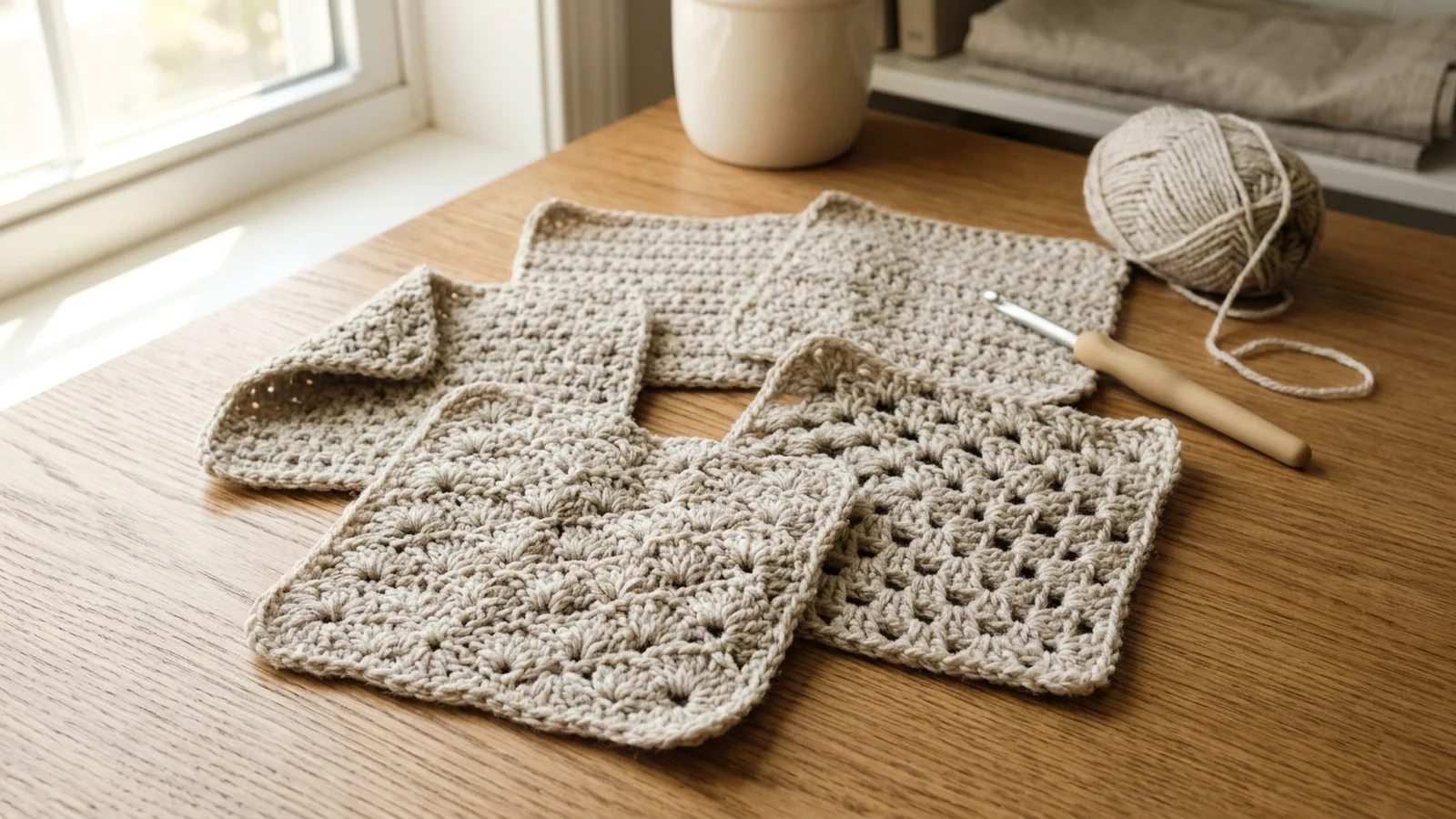
Granny stitch works clusters of three double crochet separated by chain spaces, with each new row’s clusters worked into the spaces between the clusters below. The surface is soft and slightly lacy, the drape is good, and because it is built from double crochet it progresses quickly. The gaps mean less insulation, and I would expect it to cover an area with less yarn than a solid stitch of similar height, though your tension and hook can change that. You count clusters rather than single stitches, and the foundation chain must fit the repeat, so it suits someone already comfortable with double crochet.
Moss stitch
Moss stitch, often called linen stitch, alternates single crochet with chain 1, and each single crochet goes into the chain space of the previous row. The result is a flat, finely woven-looking fabric with a soft hand in most yarns. Its speed is close to single crochet, though the chain spaces may save a little time. It is less dense than solid single crochet, so it sits in the middle for warmth. The one thing to watch is alternation: each single crochet should sit over a chain space, so check that every few rows. The repeat is a multiple of two, plus a turning chain allowance.
Shell stitch
Shell stitch groups several double crochet into the same stitch or space, usually anchored by skipped stitches or single crochet between shells, which creates a scalloped surface. It has a rhythm many people find satisfying, and drape is generally good. Speed is moderate because you are counting skips as well as working stitches. It is the most demanding of the six: the foundation chain has to match the pattern’s repeat, and row ends often finish with partial shells. For a full version with counts, see the crochet shell stitch blanket pattern.
Blanket stitch comparison at a glance
| Stitch | Speed | Texture | Drape | Warmth | Yarn use | Beginner accessibility |
|---|---|---|---|---|---|---|
| Single crochet | Slowest | Smooth, dense | Firm | Higher | Higher | Very accessible |
| Half double crochet | Moderate | Slightly ridged, dense | Moderate | Higher | Higher | Very accessible |
| Double crochet | Faster | Taller, fairly smooth | Softer | Moderate | Moderate | Accessible after sc |
| Granny stitch | Fast | Clustered grid | Soft | Lower | Lower to moderate | Accessible with cluster counting |
| Moss stitch | Moderate to slow | Fine, woven look | Soft, flat | Moderate | Moderate | Accessible, track the alternation |
| Shell stitch | Moderate | Scalloped | Soft | Moderate | Moderate | Leans intermediate |
These are relative comparisons, not measurements. They assume the same yarn and a hook suited to that yarn; change either and a stitch can move up or down a column.
Speed: what actually makes a blanket faster
Speed comes from three things: stitch height, motions per stitch, and how much counting a stitch demands. Taller stitches add more fabric per row and mean fewer turns, which is why double crochet and granny stitch tend to lead. A short stitch can be quick to work but needs many more rows. Counting matters too: a stitch that makes you stop and recount, or rip back, is slower in practice than its height suggests.
A heavier yarn and larger hook also speed things up, but they change texture, drape, and yarn use as well, so it is not a free upgrade. For more ways to move faster, see my guide to the fastest crochet stitch for a blanket.
How yarn changes warmth, drape, and stiffness
The same stitch can behave very differently depending on the yarn. Weight comes first: a heavier yarn builds a thicker fabric more quickly, while a lighter one gives a thinner, more flexible result but takes longer.
Fiber comes next. Cotton and other plant fibers generally have little stretch and can feel stiff in a dense stitch, so I would pair them with a taller or more open stitch. Wool is elastic and generally insulating. Acrylic varies widely between brands, so its behavior is best judged from a swatch. Blends can fall anywhere between.
Hook size shifts the balance too. Yarn labels suggest a hook, and moving up a size or two can soften a fabric that feels too firm, though you should swatch before committing.
A simple decision framework for your blanket
Use this order to choose a stitch:
- Pick your top two criteria from the six above. You will rarely get all six.
- Choose your yarn first, since its weight and fiber set the limits for every stitch.
- Shortlist two or three stitches from the comparison table.
- Swatch each one in the actual yarn and hook, large enough to show several repeats.
- Judge each swatch by draping it over your lap and folding it, not just by looking at it flat.
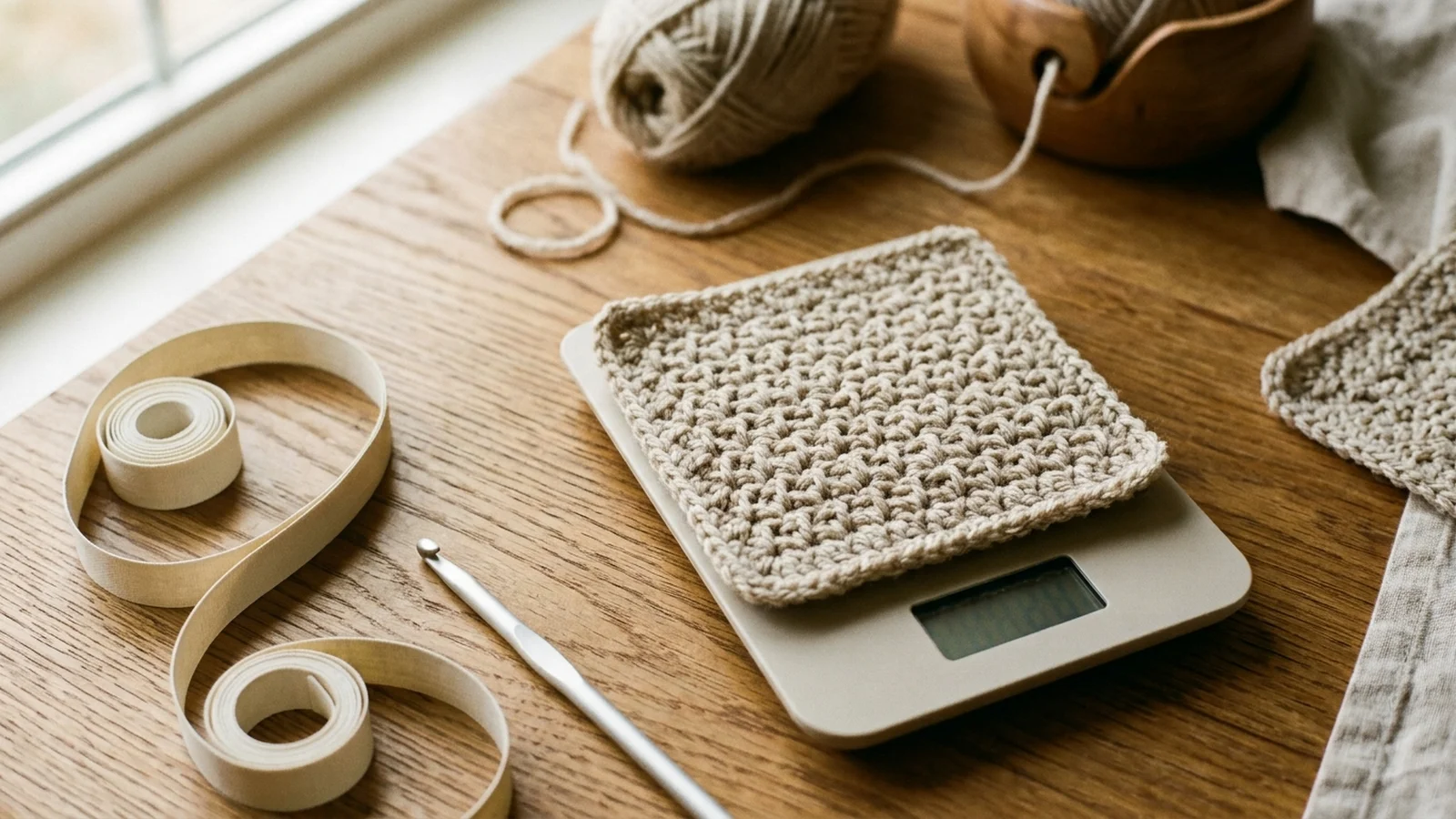
- Weigh each swatch to estimate how much yarn the blanket will need.
- Choose the stitch whose swatch best matches your top two priorities.
The weighing step is the one most people skip, and it is the most reliable way to compare yarn consumption. Measure the swatch area, weigh it, and scale up. As an illustration, imagine a 4 by 4 inch swatch that weighs 10 grams. A 36 by 48 inch blanket is 1,728 square inches, which equals 108 swatch-sized areas, so the blanket would need about 1,080 grams. Those numbers are invented to show the arithmetic; use your own swatch weight, and add a cushion of roughly 10 percent for borders and finishing.
Planning size: repeat multiples and fabric density
Single crochet, half double crochet, and double crochet work over any number of stitches, so you can size a blanket to the inch. Patterned stitches do not. Granny, moss, and shell stitches need a foundation chain that fits their repeat, so the width changes in steps of one repeat.
Measure one repeat on a relaxed swatch. If a repeat is about 2 inches wide, a blanket 40 inches across takes 20 repeats. If you were aiming for 41 inches, you would have to choose between 20 repeats (40 inches) and 21 (42 inches). Add any border width to your target before you do this math.
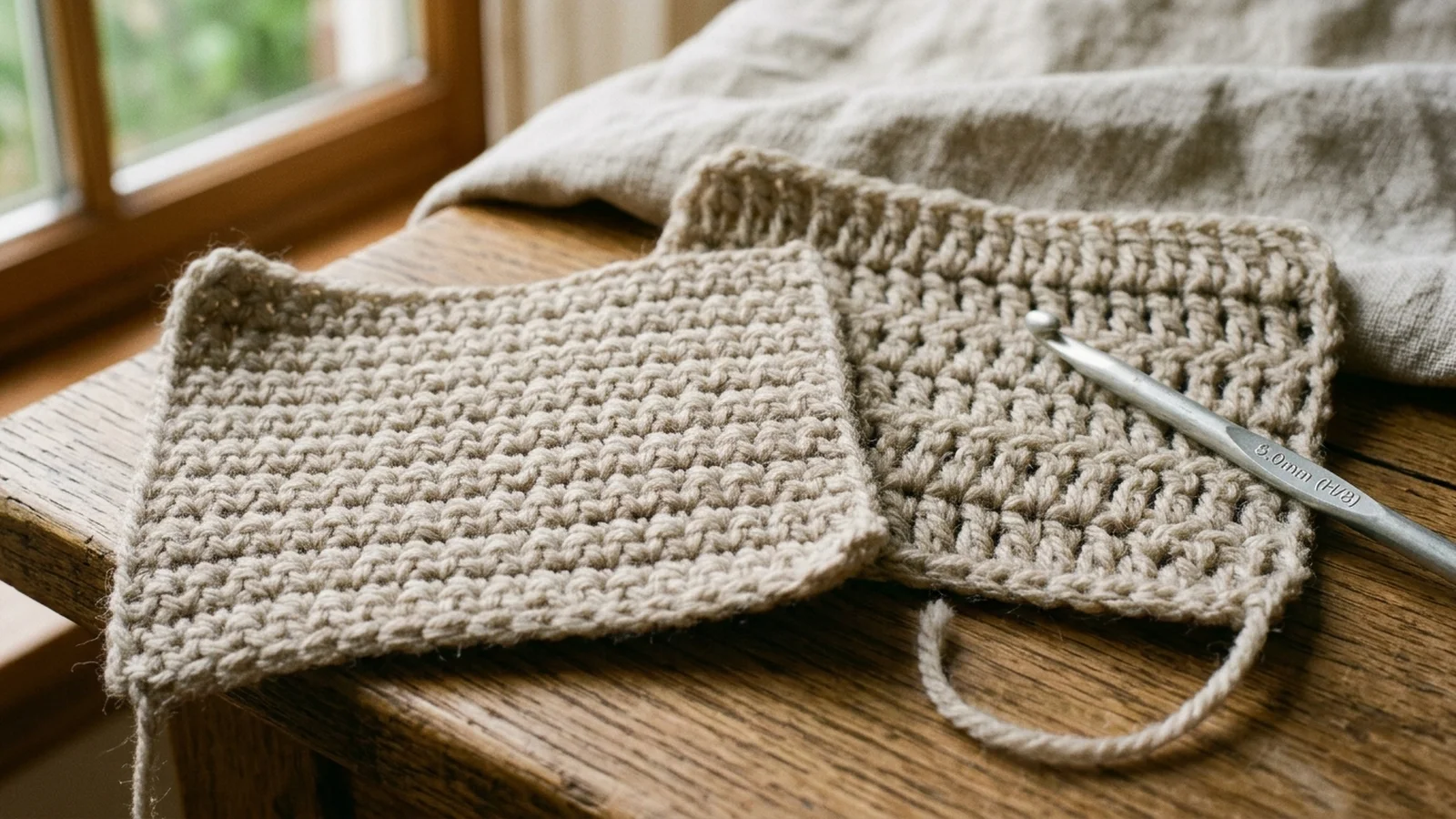
Density affects length and weight. Tall stitches reach a given length in fewer rows, while short stitches need many more. A dense fabric also uses more yarn per area, so a large blanket in a dense stitch can end up heavy. Measure row height as well as width when you swatch.
Customizing: color, borders, and finishing touches
Color changes how a stitch reads. Solid or softly tonal yarns show texture, while strongly variegated yarn can hide shell and cluster definition. Stripes work well on simple stitches, where the color does the decorating.
A border can firm up edges, correct small width errors, and frame the blanket. A border in a dense stitch can also pull the edge tighter than the body, so consider a larger hook for it. Borders add to the overall dimensions, so plan for them.
Troubleshooting a stitch that is not behaving
The fabric feels too stiff
Stiffness usually comes from a hook that is small for the yarn, tight tension, a dense stitch, or a fiber with little give. Try a hook one size larger, relax your grip, or move to a taller or more open stitch. If the yarn itself is the cause, a softer yarn will help more than any hook change.
The fabric feels too loose
A loose fabric usually means the hook is large for the yarn or the stitch is open. Drop a hook size, choose a denser stitch such as half double crochet, or use a yarn with more body. For baby blankets, a tighter fabric also keeps holes small.
The repeat does not fit the width
Add or remove a full repeat, change your hook slightly, or use a border to make up the difference. Recount your foundation chain against the pattern’s stated multiple before you go further, because an off-by-one chain is a common cause.
Frequently asked questions
What is the easiest crochet stitch for a blanket?
Single crochet is the easiest, since it is one repeated action with simple counting. Half double crochet is a close second and works faster, though watch the turning chain.
What stitch uses the least yarn?
There is no universal answer. Open stitches with chain spaces, such as granny stitch, may cover an area with less yarn than dense stitches, but hook size and tension matter. Weigh a swatch to find out.
What stitch makes the fastest blanket?
Tall stitches such as double crochet and granny stitch are generally fastest because each row adds more height. A heavier yarn and bigger hook will speed it further, at the cost of drape and yarn use.
What stitch works well for baby blankets?
Stitches with small gaps, such as single crochet, half double crochet, and moss stitch, are a reasonable starting point, since larger holes can catch small fingers and toes. Pick a yarn with care instructions that suit frequent washing. For infants, pediatric safe-sleep guidance advises against loose blankets in the sleep space, so a baby blanket is better suited to strollers, play, and laps.
Before you commit to a stitch
Choose your top two priorities, swatch two stitches in the yarn you will actually use, and let the swatches decide. If a stitch fails your priorities on a small swatch, it will likely do so at full size.

Last updated . Found something out of date? Let us know.