 Accessories
 Baby & Kids
 Blankets & Afghans
 Clothing
Fastest Crochet Stitch for a Blanket: A Real Comparison
If you've searched for the fastest crochet stitch for a blanket, the honest answer is that no single stitch wins in every situation.
 Nicole Sinclair
Published · Updated · 10 min read
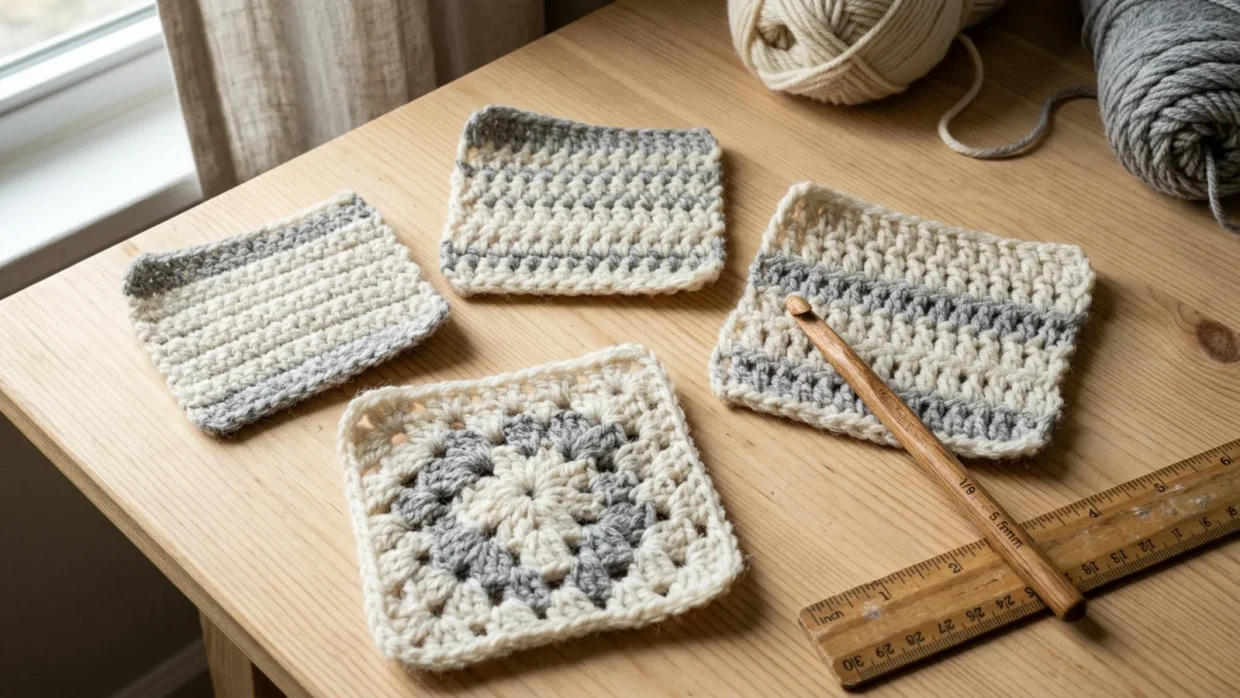
Several blanket swatches worked in different stitch heights and yarn weights, laid out together to compare how quickly each one builds up
A lot of “fast crochet blanket” roundups skip straight to naming one stitch and moving on. That’s tidy, but it isn’t accurate, because how quickly a blanket comes together depends on several choices working together, not one stitch pick. This guide walks through the factors that genuinely change your speed, so you can make faster decisions for your specific project instead of chasing a single “fastest crochet blanket pattern” that may not hold up once you change the size, yarn, or your own experience level.
What Actually Determines the Fastest Crochet Stitch for a Blanket
Speed isn’t really about one stitch being magic. It comes down to five practical factors, and they interact with each other constantly:
- Coverage per stitch – how much space a single stitch fills, which determines how many stitches the blanket needs in total
- Repeat complexity – how many separate motions or stitch types are packed into one repeat
- Yarn weight and hook size – which set the physical size of every stitch you make
- Project size – the finished dimensions, which affect total stitch count more than most people expect
- Finishing time – borders, seaming, and weaving in ends, which can add up to a real share of the total working time
I’ll go through each one, because understanding why they matter is more useful than memorizing a single “fastest” answer. If you want a deeper look at stitch definition and drape for blankets specifically, separate from the speed question, I’ve covered that side of the decision in best crochet stitch for a blanket.
Coverage Per Stitch: Why Taller Isn’t Automatically Faster
Coverage per stitch means how much area a single stitch fills before you move to the next one. A single crochet stitch is short and dense, so it takes many stitches to fill a row. A double crochet stitch is roughly twice the height, so a row reaches the same width with fewer stitches. On paper, that makes taller stitches look like the faster choice, and in a lot of cases they are.
But treating taller stitches as automatically faster – or automatically more economical – misses two things. First, a taller stitch usually pulls through more yarn per stitch, so while you’re making fewer stitches overall, each one takes slightly longer and uses more yardage. Second, taller stitches generally produce a more open, drapier fabric, and for a blanket that often means needing a bit more width and length to reach the same finished cover, plus a firmer border to keep the edges from curling. Time saved in the body of the blanket can end up spent back on the edges.
| Stitch or Method | Coverage Per Stitch | Repeat Complexity | Typical Trade-off |
|---|---|---|---|
| Single crochet | Low – dense fabric, more rows needed | Very simple | Sturdy, tight fabric, but many stitches to reach size |
| Half double crochet | Medium | Very simple | Good balance of speed and structure |
| Double crochet | Medium-high | Simple | Faster rows, but a more open fabric |
| Treble or extended stitches | High | Simple | Very fast rows, but loose and yarn-hungry |
| Granny clusters / corner-to-corner blocks | High, thanks to open chain spaces | Simple once memorized | Quick motion, but more ends if colors change often |
| Post stitches, cables, popcorns | Low to medium | High | Distinctive texture, noticeably slower |
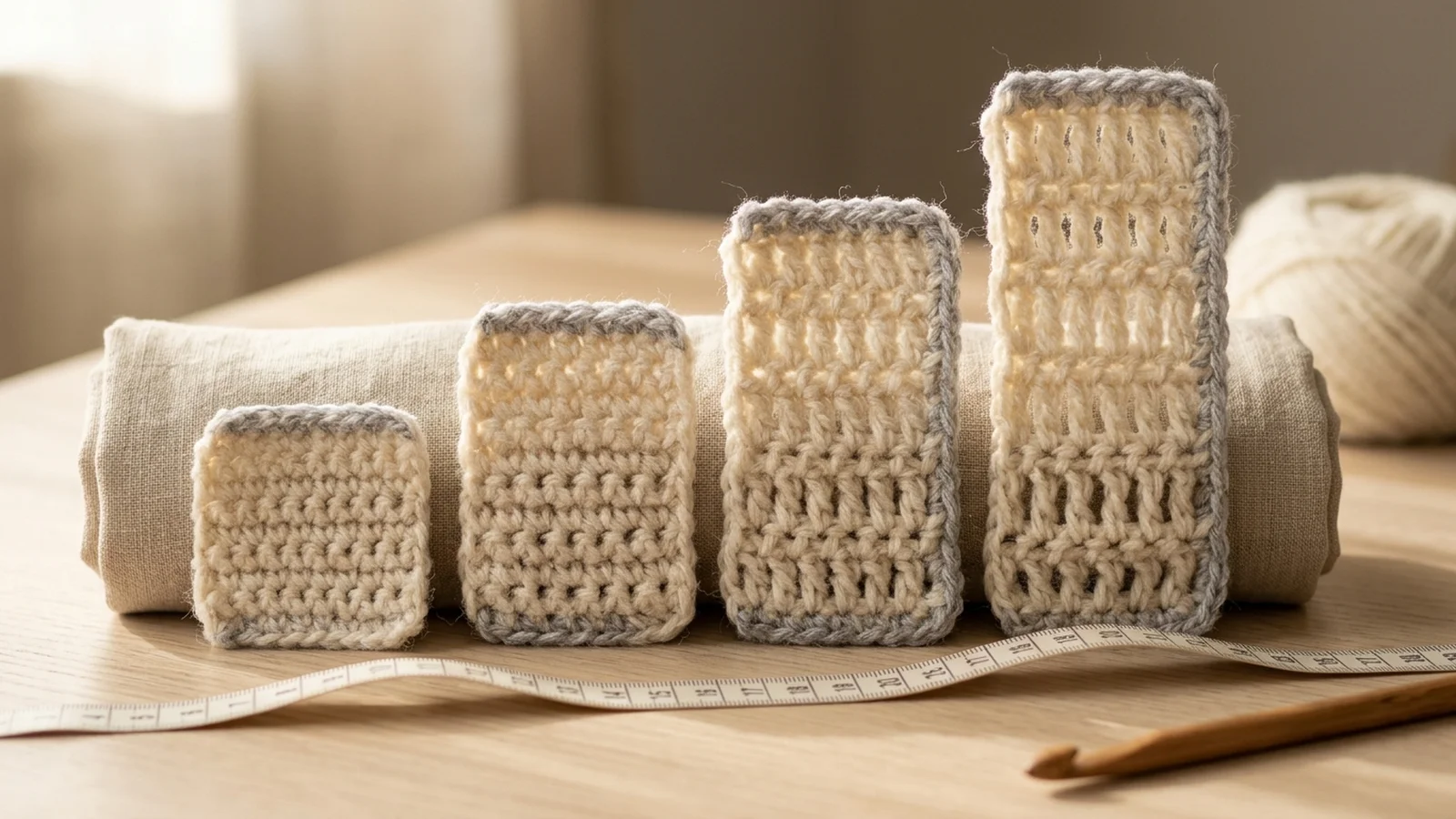
Granny clusters and corner-to-corner blocks are worth a closer look, because their speed doesn’t come from stitch height at all. They’re worked in groups of two or three stitches into a shared space, separated by chain stitches rather than a full row of stitches into every loop. Those chain spaces don’t require inserting the hook into a stitch, so they genuinely move faster than a solid row of the same height would.
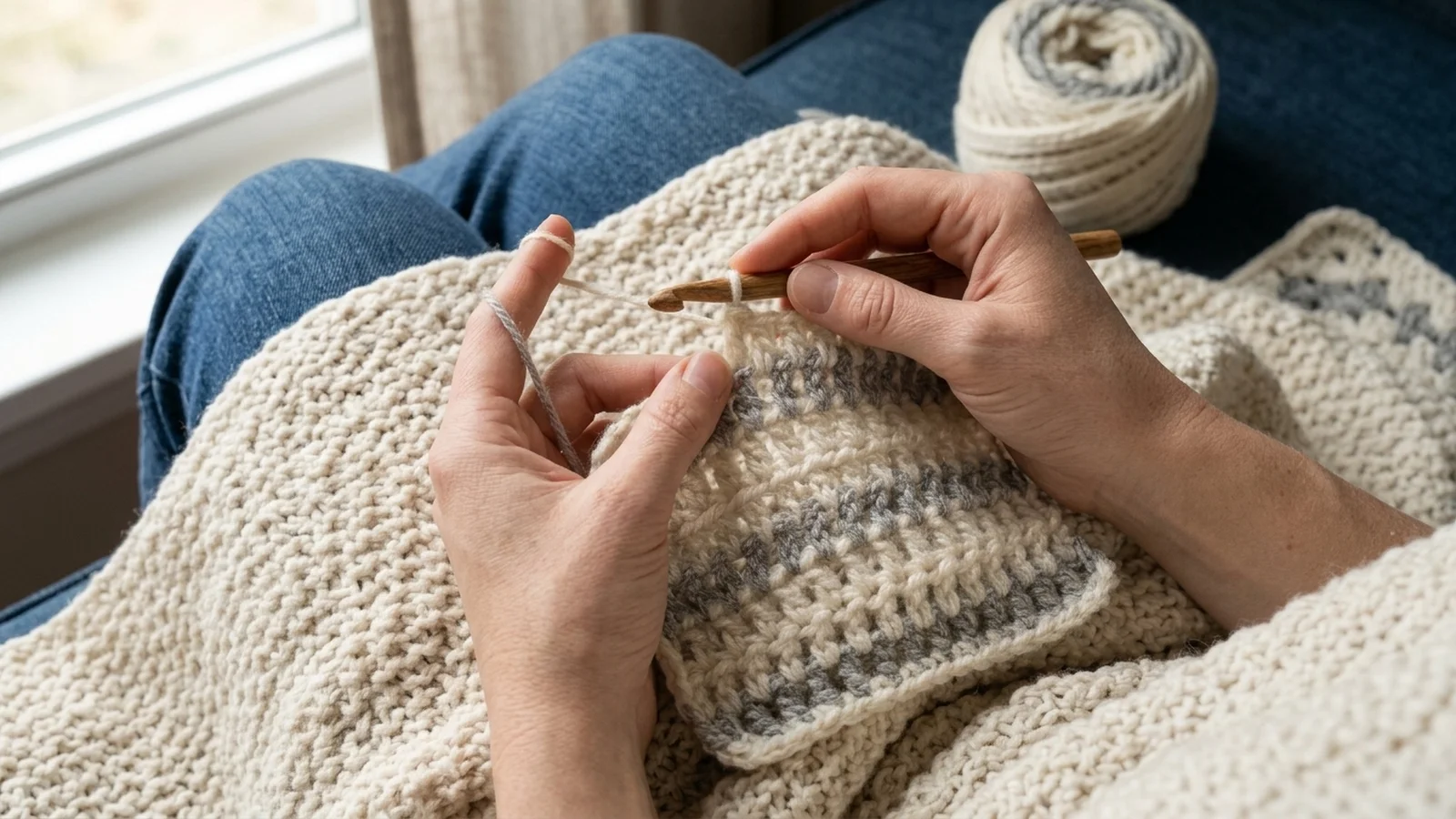
Repeat Complexity: A Simple Pattern Usually Beats a Fancy One
Stitch height alone doesn’t predict speed if the repeat asks your hands to keep changing what they’re doing. A pattern that alternates front post and back post stitches, or that drops in a popcorn every few stitches, forces constant position and technique changes. Even if the finished fabric looks similar in height to a plain double crochet row, that switching slows you down more than a stitch-height comparison would suggest. If speed matters more to you than a specific texture, a one- or two-row repeat worked in a single stitch type is the more realistic choice for an easy fast crochet blanket.
It’s also worth separating speed from beginner difficulty. A repeat can be genuinely quick to work once you already know it, while still taking longer to learn the first time through. If you’re newer to crochet, that learning curve is worth factoring in – a “fast” stitch isn’t necessarily the easiest one to pick up, and the two questions deserve separate answers.
Yarn Weight and Hook Size Change the Math
Yarn weight and hook size work together, and they usually matter more than which stitch you choose. A worsted-weight yarn on a 5.5 mm hook produces a certain stitch size; the same stitch worked in a bulky yarn on an 8 mm hook produces a noticeably larger one, which means fewer total stitches for the same finished measurements.
That’s a real speed advantage, and it’s the main reason bulky and super bulky yarns come up so often in searches for a quick crochet baby blanket or a weekend throw. But bigger stitches use more yarn per stitch, not less, so the yardage and cost savings people sometimes expect from “fewer stitches” don’t automatically follow. A bulky blanket usually finishes sooner, not cheaper. If you want to work through that trade-off yarn by yarn, I’ve gone into more detail in how to crochet a blanket with chunky yarn.
Holding two strands of worsted-weight yarn together is a middle path some crocheters prefer. It gets you close to the stitch size of a single bulky strand while using yarn you may already have on hand, though it does mean tracking two ends instead of one, which adds a small amount of setup and finishing time of its own.
Project Size Usually Matters More Than Stitch Choice
The finished size you choose changes total stitching time more than any stitch pattern will.
It’s easy to focus on stitch choice and forget that finished size affects total stitch count more than almost anything else. Blanket dimensions scale in two directions at once, so increasing both the width and the length doesn’t add stitches in a straight line – it multiplies them. A throw that’s twice as wide and twice as long as a lapghan needs roughly four times the stitches, regardless of which stitch you’re using.
This is why a baby blanket or lap-sized throw worked in a plain stitch will almost always come together faster than a queen-size bedspread worked in the “fastest” stitch on any comparison list. If finishing quickly is genuinely the priority, choosing a smaller, well-proportioned size does more for your timeline than optimizing the stitch pattern ever will.
What This Means for a Quick Crochet Baby Blanket
Baby blankets are a useful example, because their smaller finished size already does most of the speed work for you. A blanket in the 30 by 36 inch range has a fraction of the stitches of an adult throw, so the difference between half double crochet and double crochet matters far less here than it would on a larger project.
What matters more for a baby blanket is choosing a fabric that’s dense enough not to leave gaps small fingers and toes can catch on, and a yarn that launders easily, since baby items tend to get washed often. A plain, closely worked stitch in a machine-washable yarn will usually serve better than an open, lacy repeat, even when the lacy repeat looks quicker to work up in progress photos.
Tension and Consistency Affect Speed More Than People Expect
Working tension changes speed in ways that don’t show up in any stitch comparison. If your tension is tight, you’ll spend extra effort forcing the hook into each stitch, which slows your hands down and tires them faster. If your tension is very loose, the fabric can come out uneven, or the stitches can be harder to identify on the next row, which leads to miscounts, extra checking, and sometimes frogging – pulling out and redoing a section. Redone rows cancel out any time you saved by choosing a supposedly fast stitch in the first place. Consistent, moderate tension usually does more for your actual finishing time than stitch selection does.
Finishing Choices That Quietly Add Hours
The body of the blanket is only part of the timeline. Finishing work is where a lot of otherwise fast projects lose their advantage:
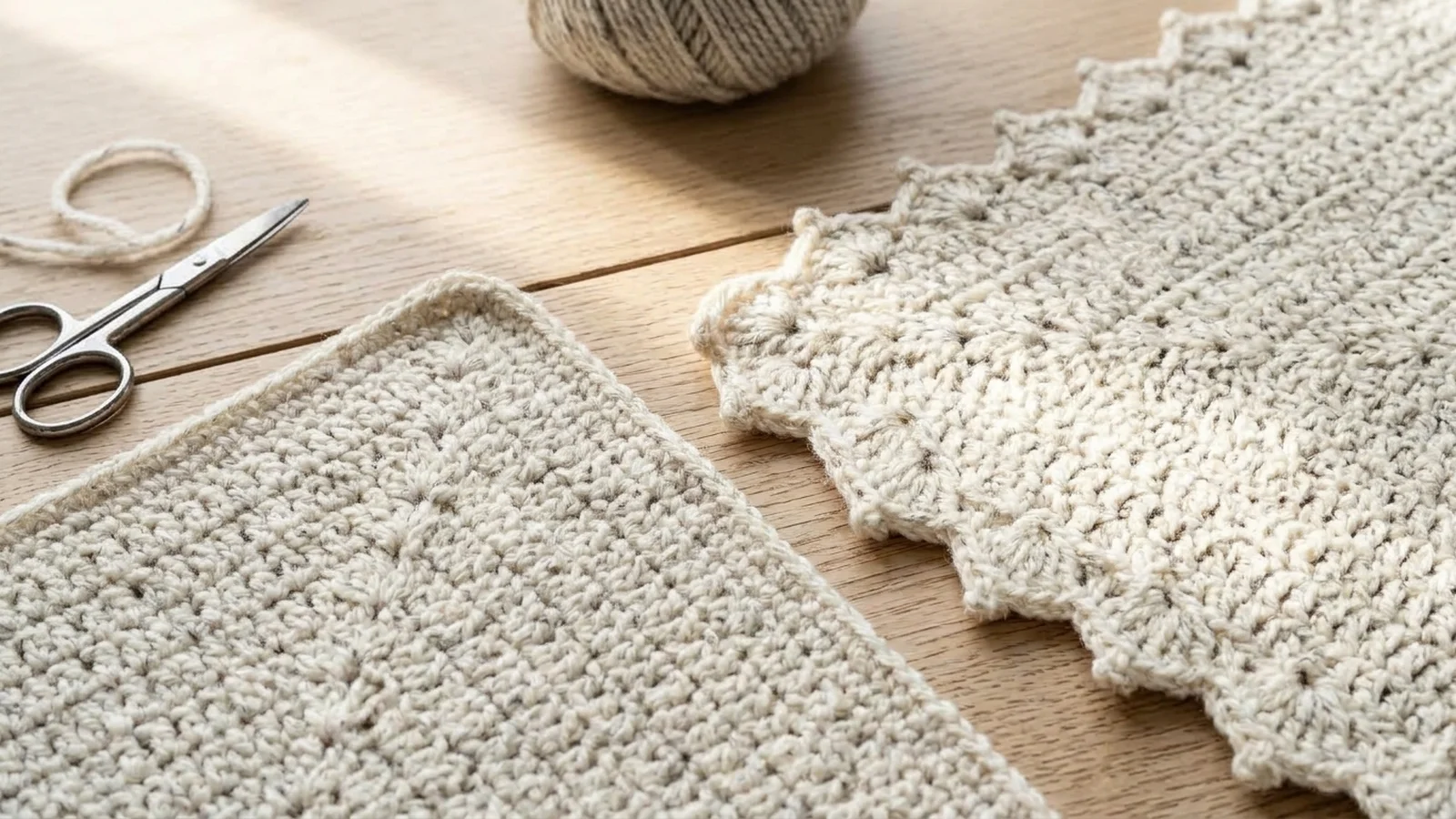
- Borders: a single round of single crochet closes the edge quickly; three or four rounds of shells, picots, or a contrasting color multiply that time and add more ends to weave in
- Seaming: if the blanket is made from joined squares or strips rather than worked in one piece, joining seams can take as long as several more rows of the body would have
- Weaving in ends: every color change or joined motif leaves ends to secure, and a blanket with frequent color changes can spend a surprising share of total time on this step alone
- Blocking: blocking mostly affects drying time rather than active working time, but if you’re relying on it to fix an uneven edge, that’s correction time you can avoid by keeping tension consistent from the start
Speed-Preserving Choices You Can Make
None of these require an unfamiliar stitch. They’re mostly decisions made before the first row:
- Pick a stitch with a one- or two-row repeat instead of a heavily patterned one
- Match your hook generously to your yarn weight rather than sizing down for a firmness you don’t actually need
- Keep color changes to a minimum, or plan them at natural stopping points like a new skein
- Choose one clean border round instead of several decorative ones
- Decide on a realistic finished size before you start, and size down if speed is the actual goal
Common Mistakes That Slow Progress
- Choosing a stitch pattern because it looks quick in photos, without noticing the repeat actually mixes several stitch types
- Working at an uneven or overly tight tension, which tires your hands and can force you to redo rows
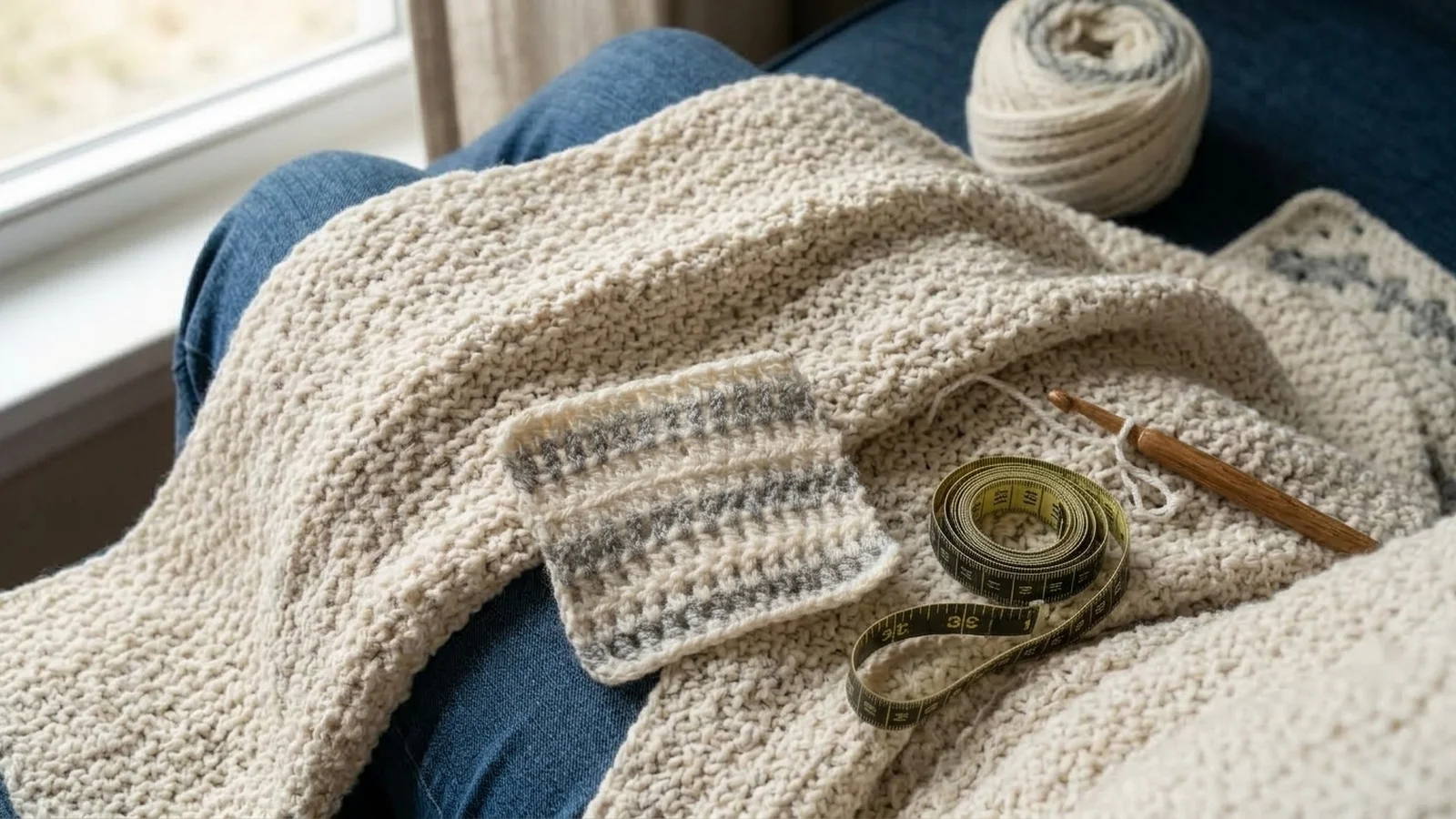
- Timing a small swatch and assuming the full blanket will scale at the same rate – a swatch skips the turning, counting, and hand fatigue that build up over a full-size project, so it tends to make the real thing feel unexpectedly slower than the swatch suggested
Frequently Asked Questions
What is the fastest crochet stitch for a blanket?
There isn’t one stitch that’s fastest in every case. Taller, simple stitches like double crochet or extended half double crochet, worked in a heavier yarn with a larger hook, tend to move quickly for most crocheters, but repeat complexity, tension, and project size can all outweigh the effect of stitch choice on its own.
Does bulky yarn make blankets faster?
Generally yes – bulky or super bulky yarn produces larger stitches, so a blanket needs fewer of them to reach the same finished size. It doesn’t necessarily make the blanket cheaper, since bigger stitches use more yarn each, and it produces a different fabric – usually heavier and less drapey – than the same pattern worked in a lighter weight.
How can I crochet a blanket faster?
The most reliable changes are picking a stitch pattern with a simple, one- or two-row repeat, matching your hook generously to your yarn weight, keeping color changes and decorative borders modest, and settling on a realistic finished size before you start. None of it depends on finding one unfamiliar or fancy stitch – it’s mostly decisions you make up front.
None of this requires chasing a single miracle stitch. If speed is genuinely the priority, the choices that move the needle are the size you settle on, the yarn and hook you pair together, and how much finishing you build in – the stitch pattern itself is usually the smallest piece of that equation.

Last updated . Found something out of date? Let us know.